2026 Cosmetic Industry Trends: How to Customize Filling Lines for Essential Oils and Serums
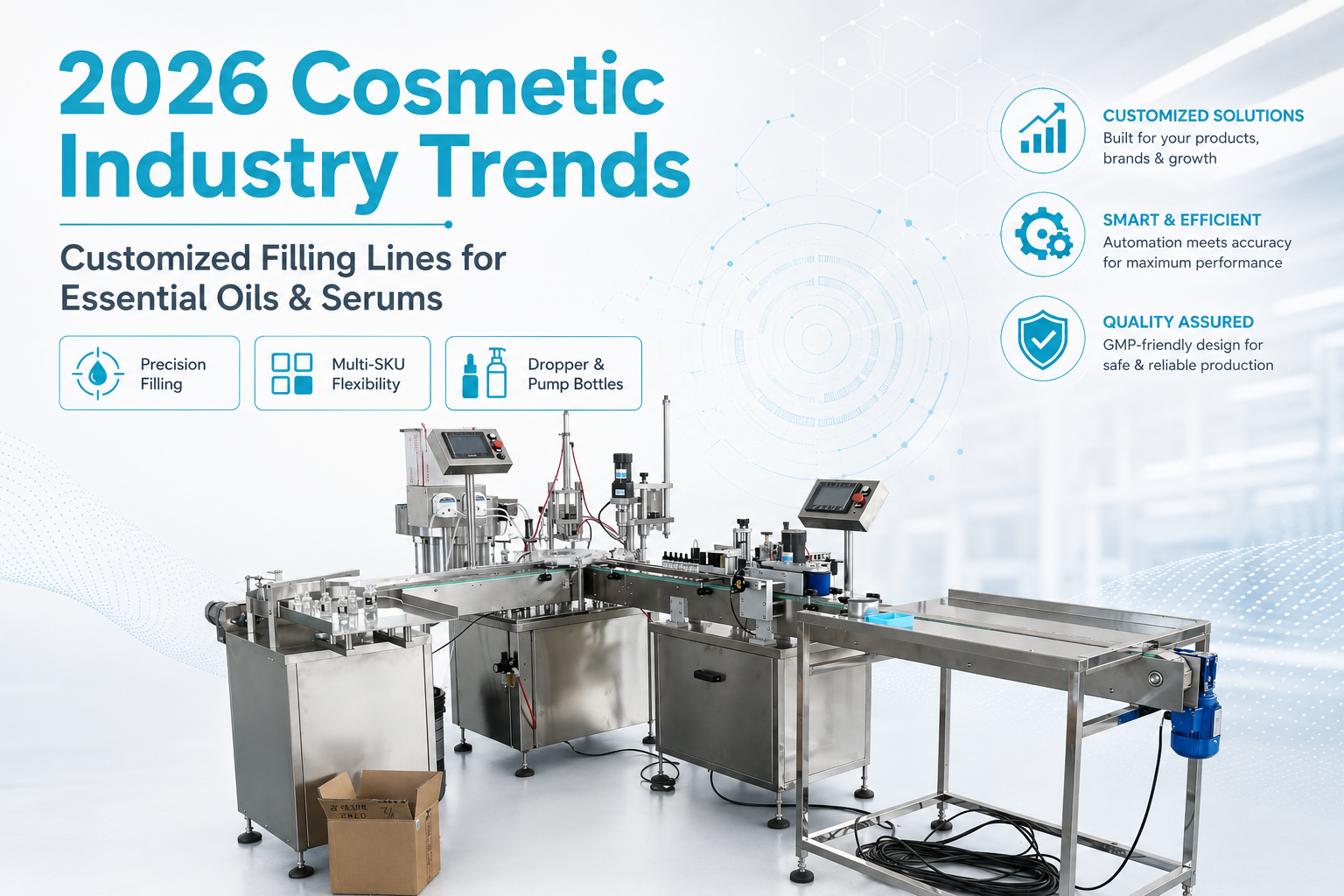
The most important 2026 cosmetic industry trends are not only changing what beauty brands sell—they are changing how those products must be manufactured and packaged.
Consumers are moving toward more targeted skincare, science-backed formulations, personalized routines, portable formats and increasingly differentiated packaging. At the same time, brands need faster product launches and more SKU flexibility. McKinsey expects the global beauty market to grow approximately 5% annually through 2030 and reach about $590 billion, while skincare, fragrance, hair care and color cosmetics continue expanding.
For cosmetic manufacturers, contract packers and growing beauty brands, the practical question is therefore no longer:
“Which filling machine can fill my current bottle?”
It is:
“Which customized filling line can handle my current products and the next five or ten SKUs I may launch?”
That distinction is especially important for essential oils and serums.
1. Targeted Serums Are Making Precision More Important
One of the clearest skincare movements in 2026 is toward products with specific functions and more technical positioning. Current industry coverage highlights consumers’ growing interest in clearly defined ingredients, measurable benefits and more credible product claims rather than vague promises. Serums focused on targeted functions are a particularly visible example.
From a production perspective, this creates a challenge.
Two products both sold as “serum” may behave completely differently on a filling machine.
A lightweight hyaluronic-acid serum may flow almost like water, while an oil serum, gel serum or concentrated formula can have much higher viscosity.
Therefore, buyers should select a serum filling machine based on the actual formulation, not simply the product name.
For low-viscosity products, a peristaltic or other precision pump system may be appropriate. For thicker formulas, a piston or servo-controlled filling solution may provide better product handling. Comparing piston and peristaltic filling machines before choosing the pump is useful when a factory produces several viscosity ranges.
2. More SKUs Mean Flexibility Is Becoming More Valuable Than Maximum Speed

Personalization and increasingly specific consumer needs are fragmenting cosmetic product portfolios. Mini sizes, trial products, targeted routines and modular product ranges are becoming more relevant across beauty.
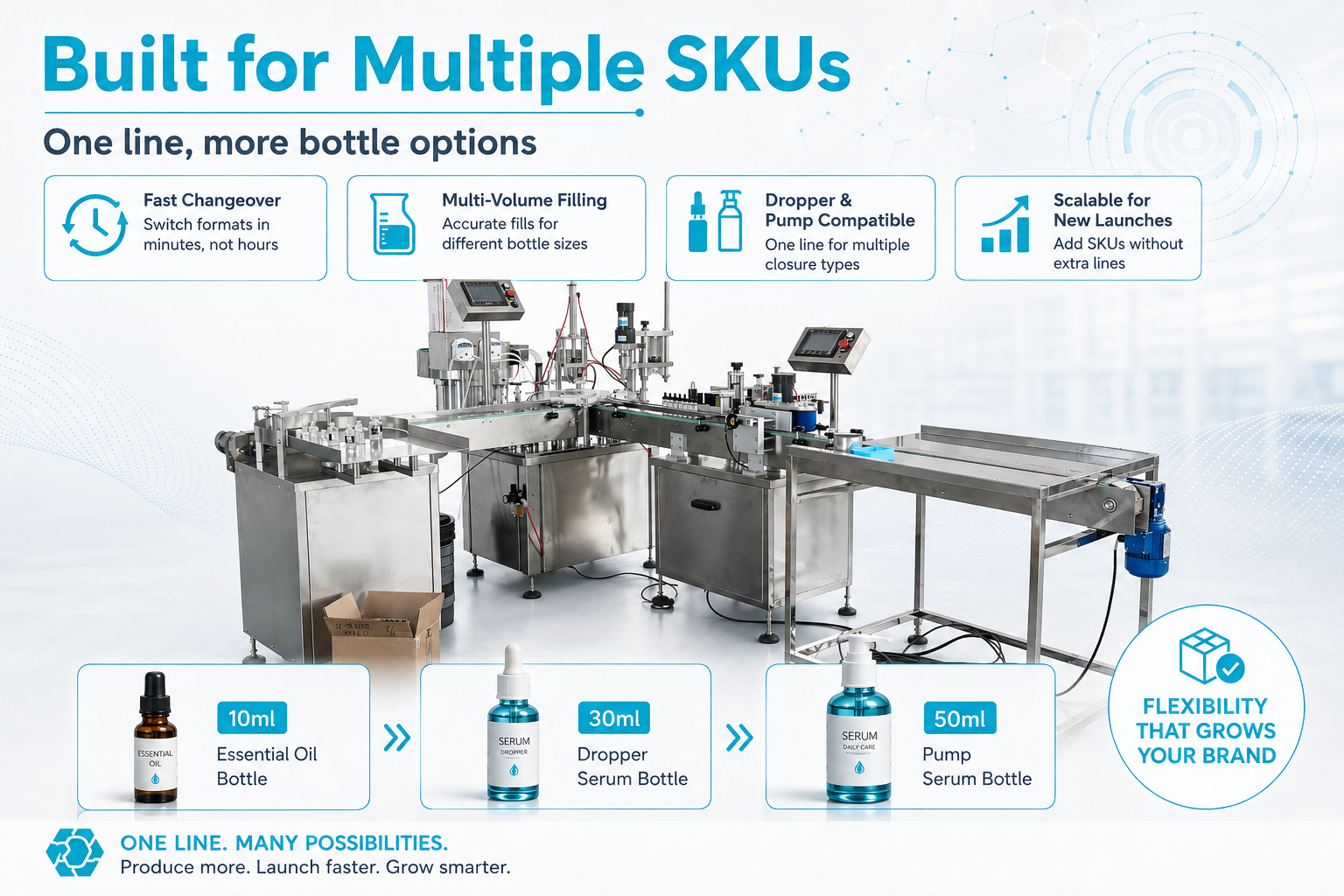
That means a factory may need to run:
- 10ml essential oil
- 15ml facial oil
- 30ml dropper serum
- 30ml pump serum
- 50ml skincare essence
on the same production platform.
In this situation, buying the machine with the highest theoretical bottles-per-minute rating can be the wrong decision.
Changeover efficiency becomes a production KPI.
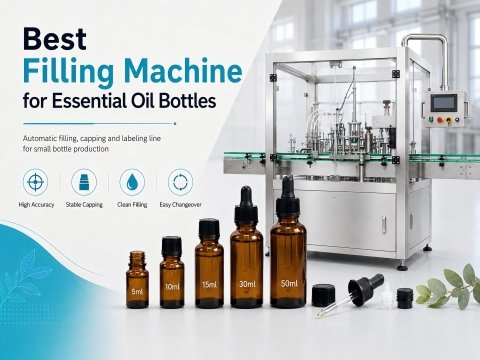
A flexible automatic small bottle filling line can be designed around multiple bottle sizes, closures and filling volumes rather than one fixed SKU.
Before ordering, ask the supplier to demonstrate how bottle guides, filling height, plug insertion, capping heads and labeling positions are adjusted between your actual formats.
3. Mini Formats and Discovery Sets Change Bottle-Handling Requirements
Travel sizes, discovery sets and portable beauty formats remain important parts of the 2026 packaging landscape. Beauty industry reporting also points toward increasingly portable and specialized packaging concepts.
For machinery buyers, smaller packaging does not automatically mean simpler machinery.
A 10ml glass bottle can actually require more careful handling than a 100ml bottle because it has:
- less conveyor stability
- a smaller bottle opening
- smaller labels
- more visible fill variation
- compact plugs, droppers or roller balls
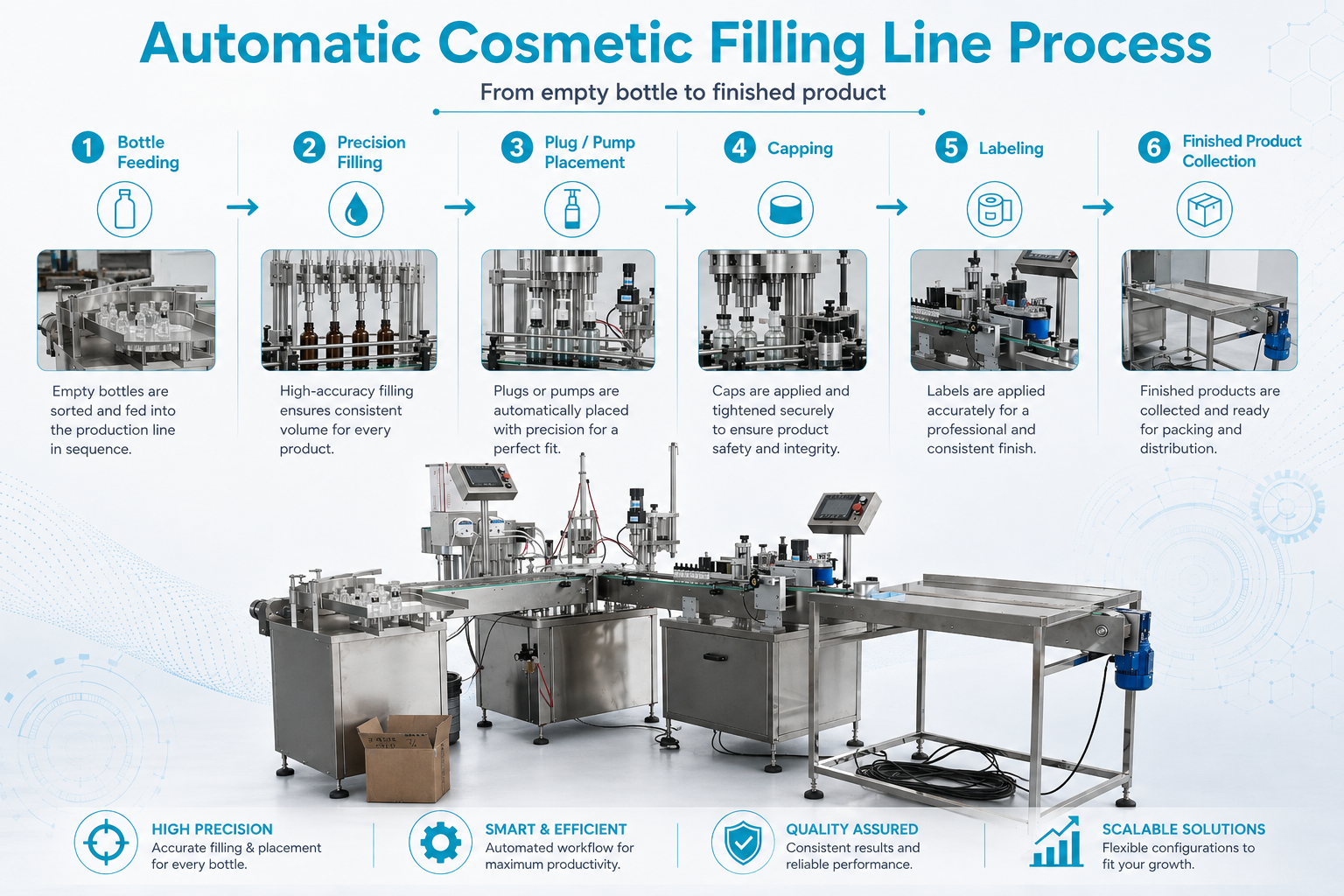
An essential oil filling machine should therefore be evaluated as a complete packaging system—filling, plug insertion, cap placement, capping and labeling—not only as a liquid dosing unit.
4. Packaging Is Becoming Part of Product Differentiation
In crowded skincare categories, packaging increasingly helps brands differentiate products that may otherwise offer similar formulations. Current 2026 packaging analysis highlights targeted applicators, airless systems, pumps, portable formats and more specialized dispensing experiences.
This affects filling-line engineering directly.
A cosmetic line may need to handle:
- pipette droppers
- inner plugs
- screw caps
- roller balls
- serum pumps
- spray pumps
- child-resistant closures
- airless containers
The difficult station may therefore not be filling—it may be automatic closure feeding and capping.
When requesting a quotation, send actual bottle, cap, plug and pump samples whenever possible.
Never assume two 30ml bottles can run on the same setup simply because their nominal volume is identical.
5. Sustainable Packaging Is Also a Machinery Question

Sustainability is increasingly moving from marketing language into packaging design and regulation. The EU Packaging and Packaging Waste Regulation generally began applying on August 12, 2026, increasing the strategic importance of packaging minimization, recyclability and circular-design considerations for companies selling into Europe.
Meanwhile, beauty packaging suppliers are seeing greater interest in mono-material and recyclable pump systems.
For equipment buyers, the implication is simple:
Do not lock a new filling line too tightly to one packaging format.
If your packaging team changes from one pump design to another two years after installation, the machine should ideally be adaptable without requiring replacement of the entire line.
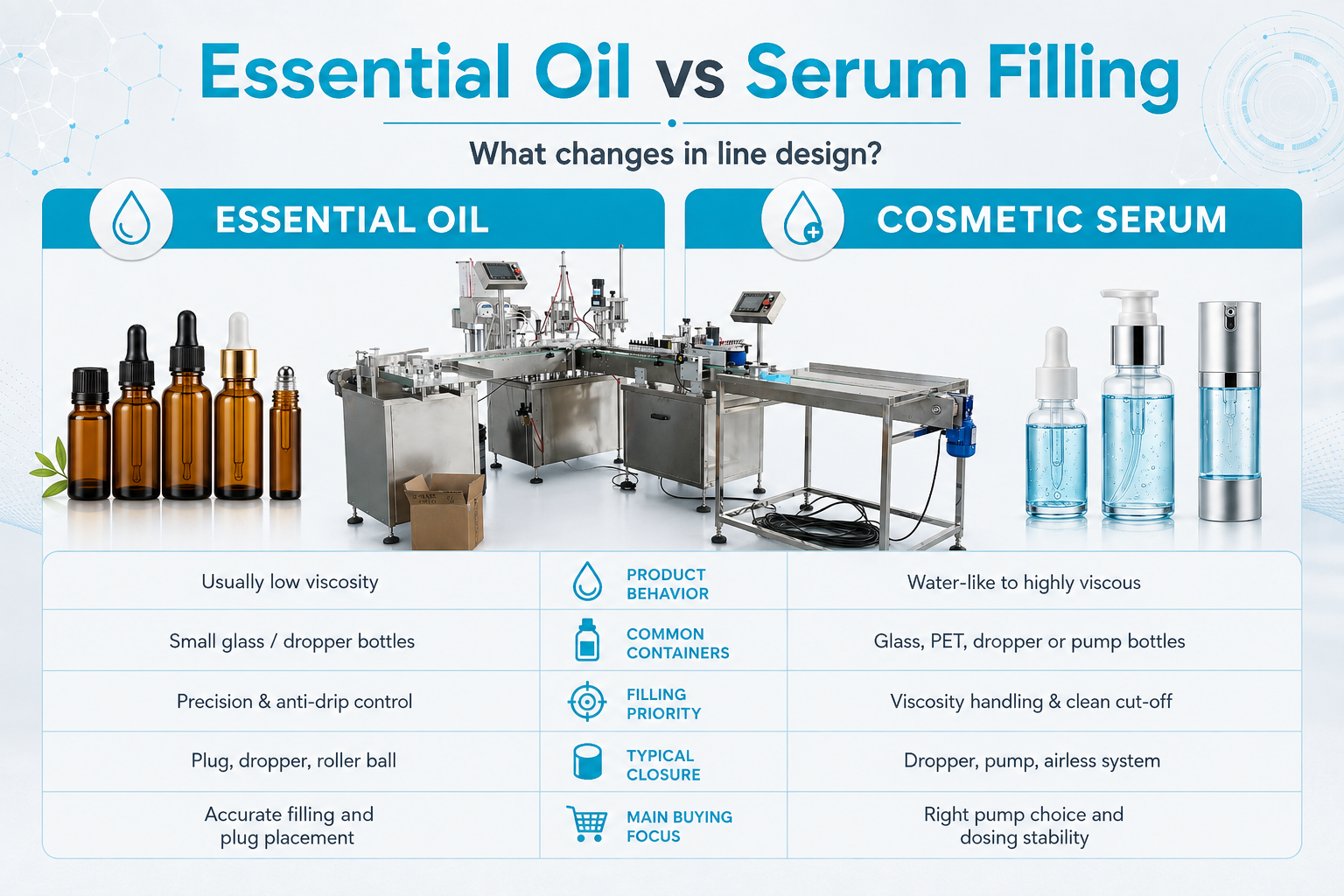
Essential Oil vs Serum Filling Line: What Changes?

| Decision Factor | Essential Oil | Cosmetic Serum |
|---|---|---|
| Typical behavior | Usually low viscosity | Water-like to highly viscous |
| Common containers | Small glass/dropper bottles | Glass, PET, dropper or pump bottles |
| Filling priority | Precision and anti-drip control | Viscosity handling and clean cut-off |
| Possible filling system | Peristaltic / ceramic / suitable pump system | Peristaltic for thin serum; piston/other metering system for thicker serum |
| Common closure | Plug, dropper, roller ball, screw cap | Dropper, pump, screw cap, airless system |
| Main buying risk | Leakage, dripping, inaccurate plug insertion | Wrong pump selection, stringing or unstable dosing |
| Future-proof priority | Multiple small bottle formats | Multiple viscosity and packaging formats |
For essential oils, see the detailed Essential Oil Filling Machine Buyer’s Guide for pump, plugging, capping and bottle-handling considerations.
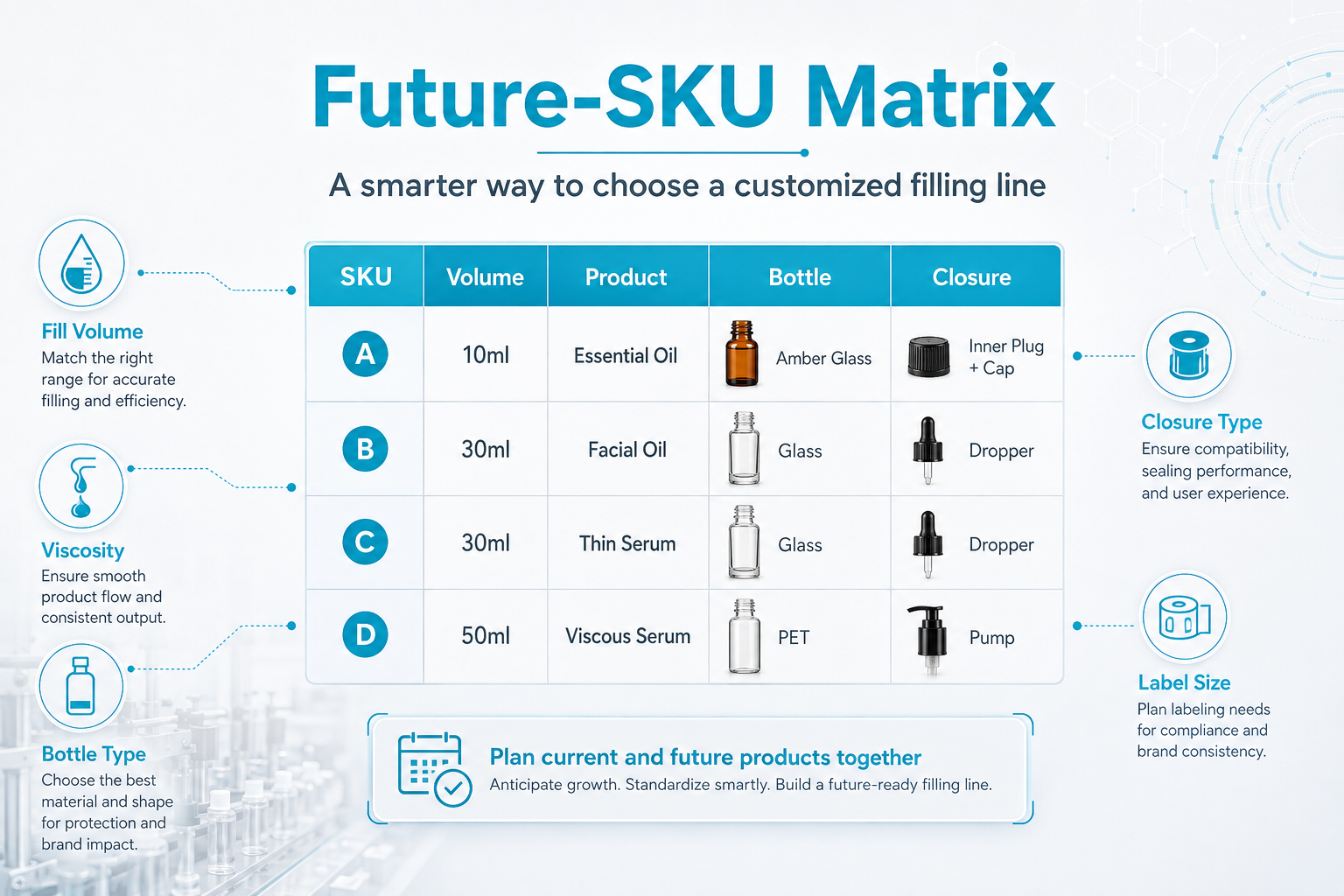
How to Build a Future-Ready Customized Cosmetic Filling Line

Instead of sending a machine supplier only your current bottle, build what we call a Future-SKU Matrix.
This is not an industry standard; it is a practical purchasing framework.
List every product you expect to manufacture during the next two to three years across five variables:
Fill volume × viscosity × bottle × closure × label
For example:
| SKU | Volume | Product | Bottle | Closure |
| A | 10ml | Essential oil | Amber glass | Inner plug + cap |
| B | 30ml | Facial oil | Glass | Dropper |
| C | 30ml | Thin serum | Glass | Dropper |
| D | 50ml | Viscous serum | PET | Pump |
The objective is not necessarily to make one machine handle everything.
The objective is to identify which SKUs can economically share the same platform before the equipment is built.
That decision can prevent expensive modifications later.
For additional bottle-volume planning, the guide to choosing a liquid filling machine for 5ml, 10ml, 30ml and 50ml bottles covers filling range, pump selection and sample testing in more detail.
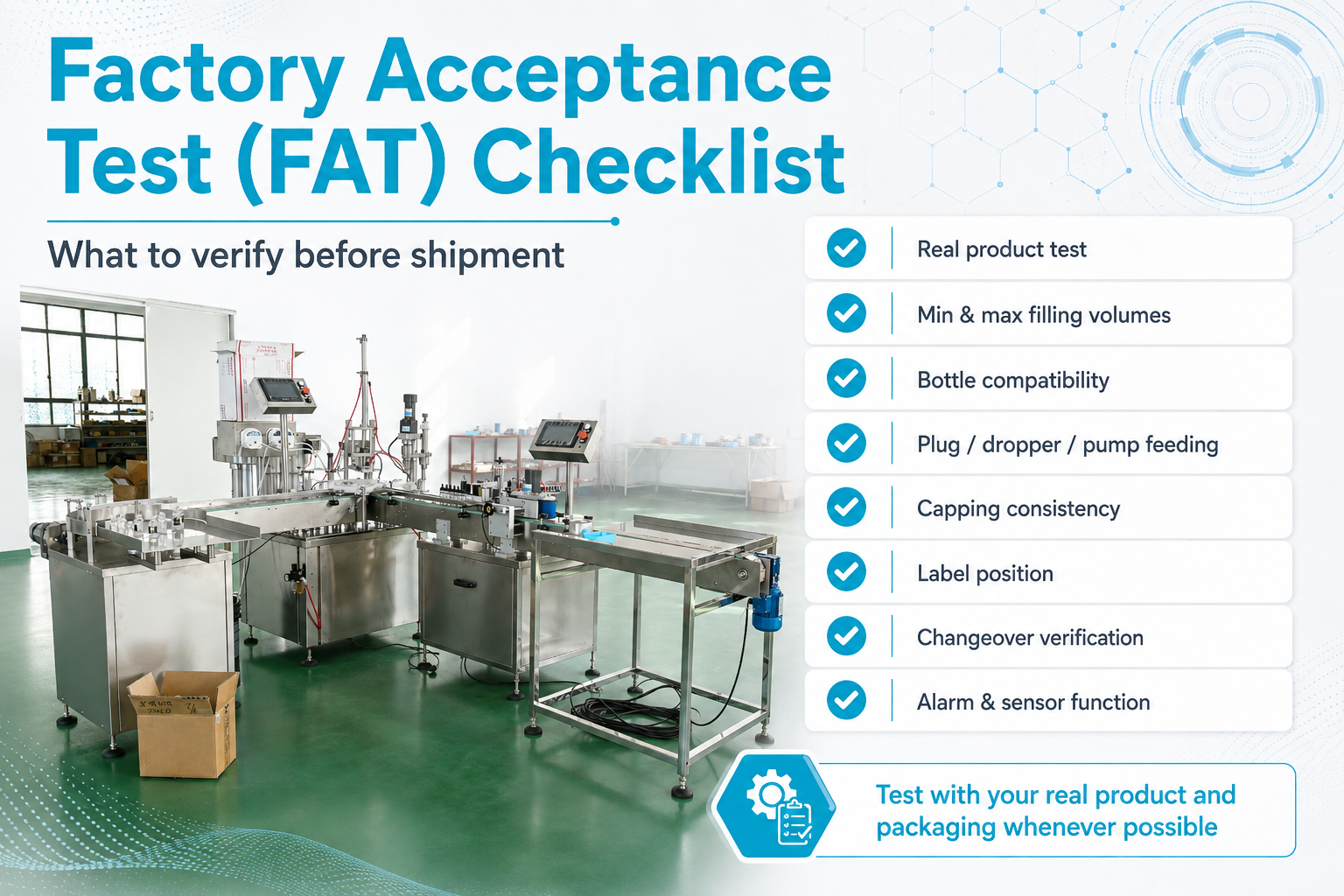
What Should You Verify During FAT?

Before shipment, do not accept a factory test using only water and a generic bottle if your actual product and packaging are available.
Ask the supplier to test:
- Your real cosmetic formula or a technically representative liquid
- Minimum and maximum filling volumes
- Every important bottle format
- Plug/dropper/pump feeding
- Capping consistency
- Fill repeatability during continuous running
- Dripping or product residue around the bottle neck
- Label position
- Changeover between major SKUs
- Alarm and bottle-detection functions
ISO 22716 provides internationally recognized GMP guidance covering production, control, storage and shipment of cosmetic products, while U.S. cosmetic manufacturers should also consider the regulatory framework created by MoCRA, including relevant facility registration and product-listing obligations.
The machinery supplier does not replace your regulatory or quality team, but equipment design should support a controlled and repeatable manufacturing process.
People Also Ask / FAQ:
For many small 5ml–50ml essential oil bottles, a precision automatic filling, plugging and capping system using a suitable peristaltic or ceramic pump can be a practical solution. Final selection should be confirmed using the actual oil, bottle and closure.
Sometimes. If the filling ranges, viscosities and packaging formats are compatible, one flexible line can process multiple products. Very different viscosities may require different pumps, filling heads or product-contact systems.
It can be excellent for low-viscosity, small-dose serums, especially when easy cleaning and product separation are priorities. Thick or gel-like serums may require another filling technology.
Yes, many linear filling lines can be customized around several bottle sizes. However, bottle guides, nozzle heights, capping components and labeling positions may require adjustment or change parts.
Send your product type and viscosity, minimum and maximum filling volume, bottle dimensions, bottle photos, cap or pump type, label dimensions, target production speed and expected future SKUs. Physical samples are strongly recommended before final machine production.
If production already requires automatic plugging, pump insertion, capping, labeling and coding, an integrated filling line normally provides better workflow than purchasing each machine independently. For early-stage production with limited output, a simpler configuration may be sufficient.
Final Recommendation
The biggest lesson from 2026 cosmetic industry trends is not that every beauty manufacturer needs a faster machine.
It is that manufacturers increasingly need more adaptable production systems.
Essential oils, facial oils, active serums, mini formats and specialized dispensing systems create more combinations of liquids, containers and closures. A filling line designed only around today’s best-selling SKU can quickly become a limitation.
Before ordering your next cosmetic filling machine, define your future SKU range, test your real materials and ask the supplier to design around the complete packaging process—from bottle feeding and filling to plugging, capping and labeling.
Need a Customized Essential Oil or Serum Filling Line?
Send us:
- Your product and viscosity
- Bottle sizes and photos
- Filling volumes
- Dropper, plug, pump or cap samples
- Label dimensions
- Required production speed
- Future bottle sizes you plan to launch
Shanghai Honest Machinery can evaluate your samples and develop a customized automatic filling, capping and labeling solution based on your actual production requirements.
Explore Automatic Small Bottle Filling Lines or contact us with your packaging samples for a customized machine recommendation and quotation.