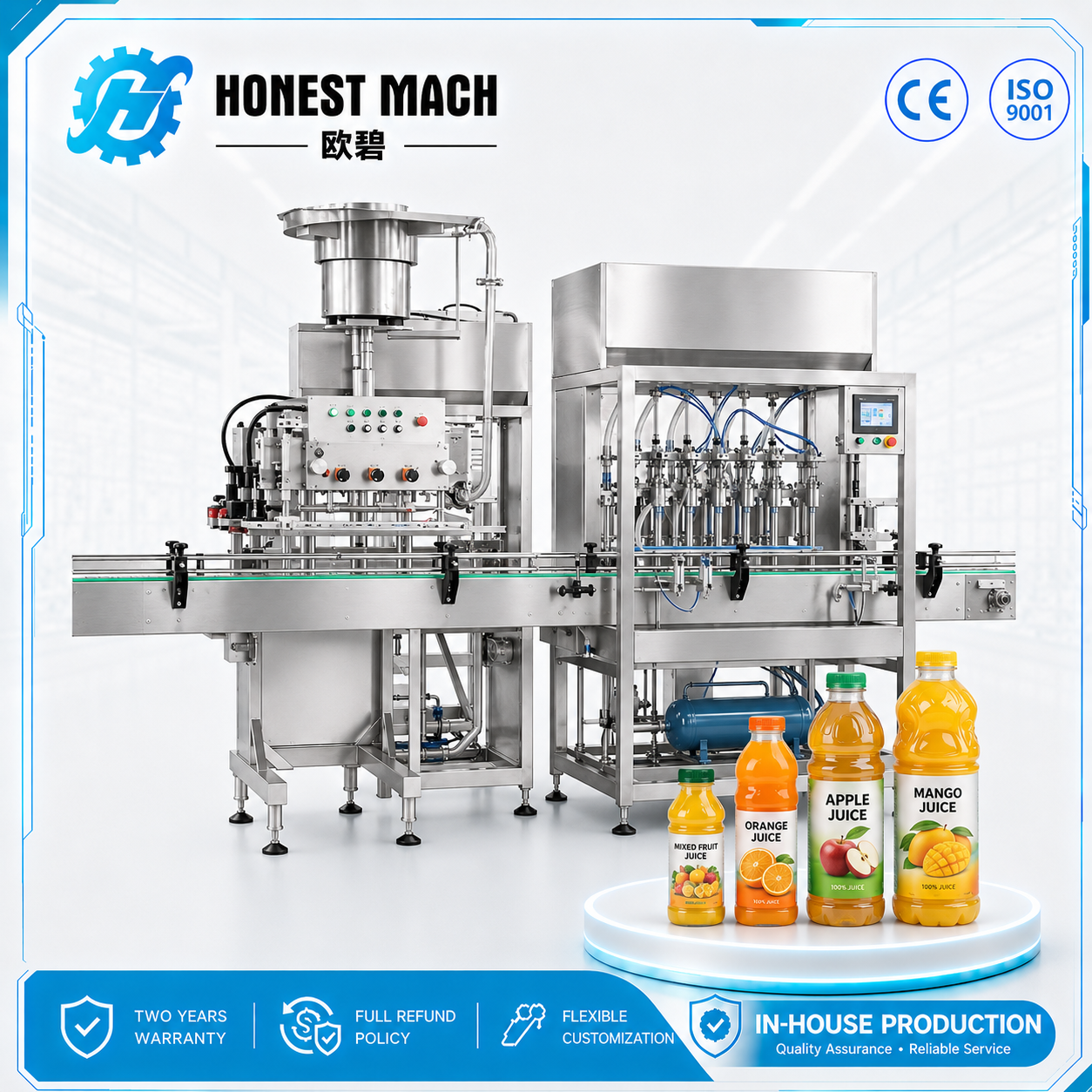
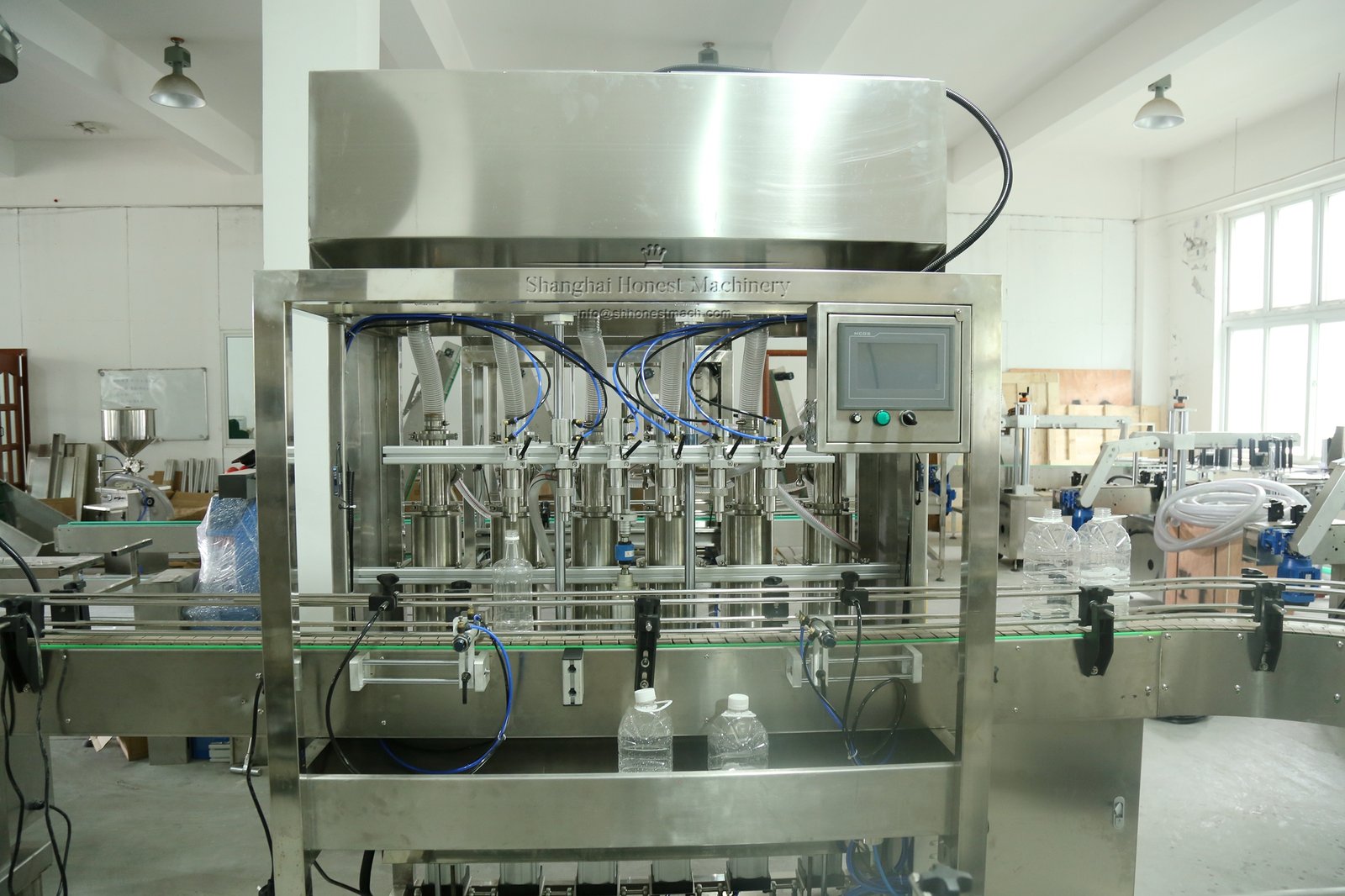
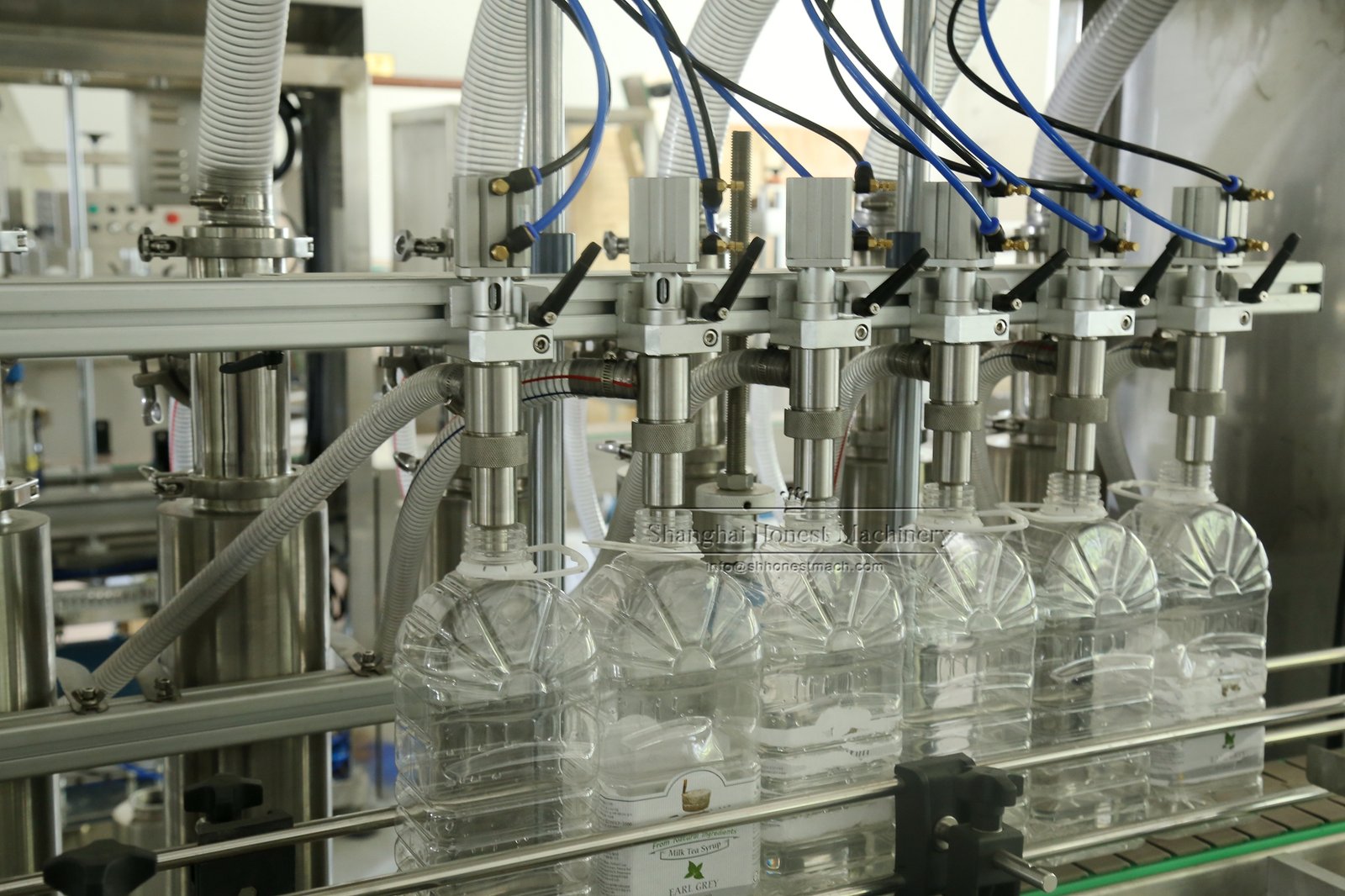
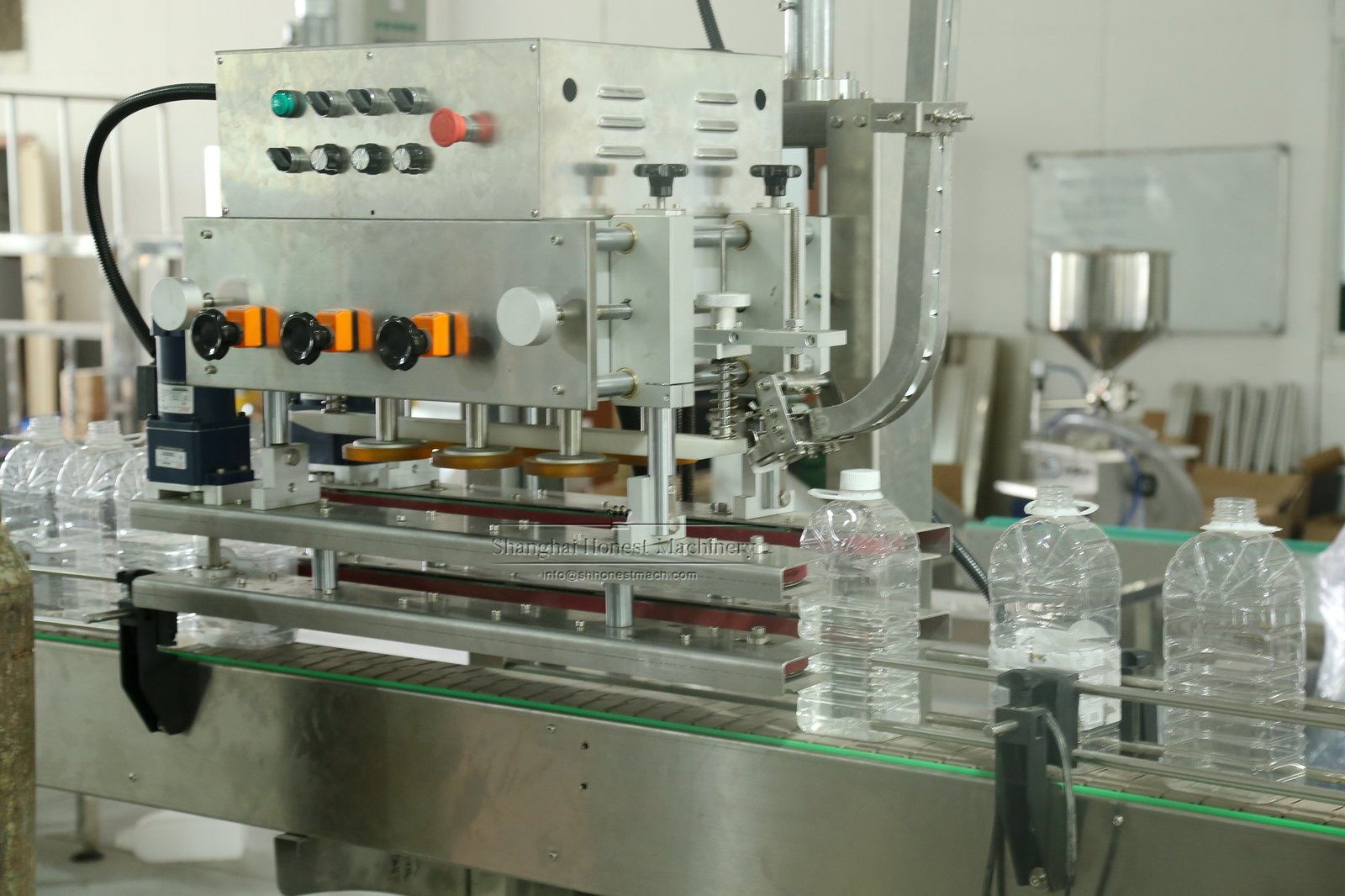
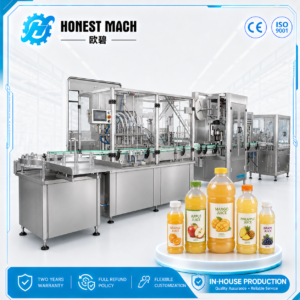
Automatic fruit juice filling machine
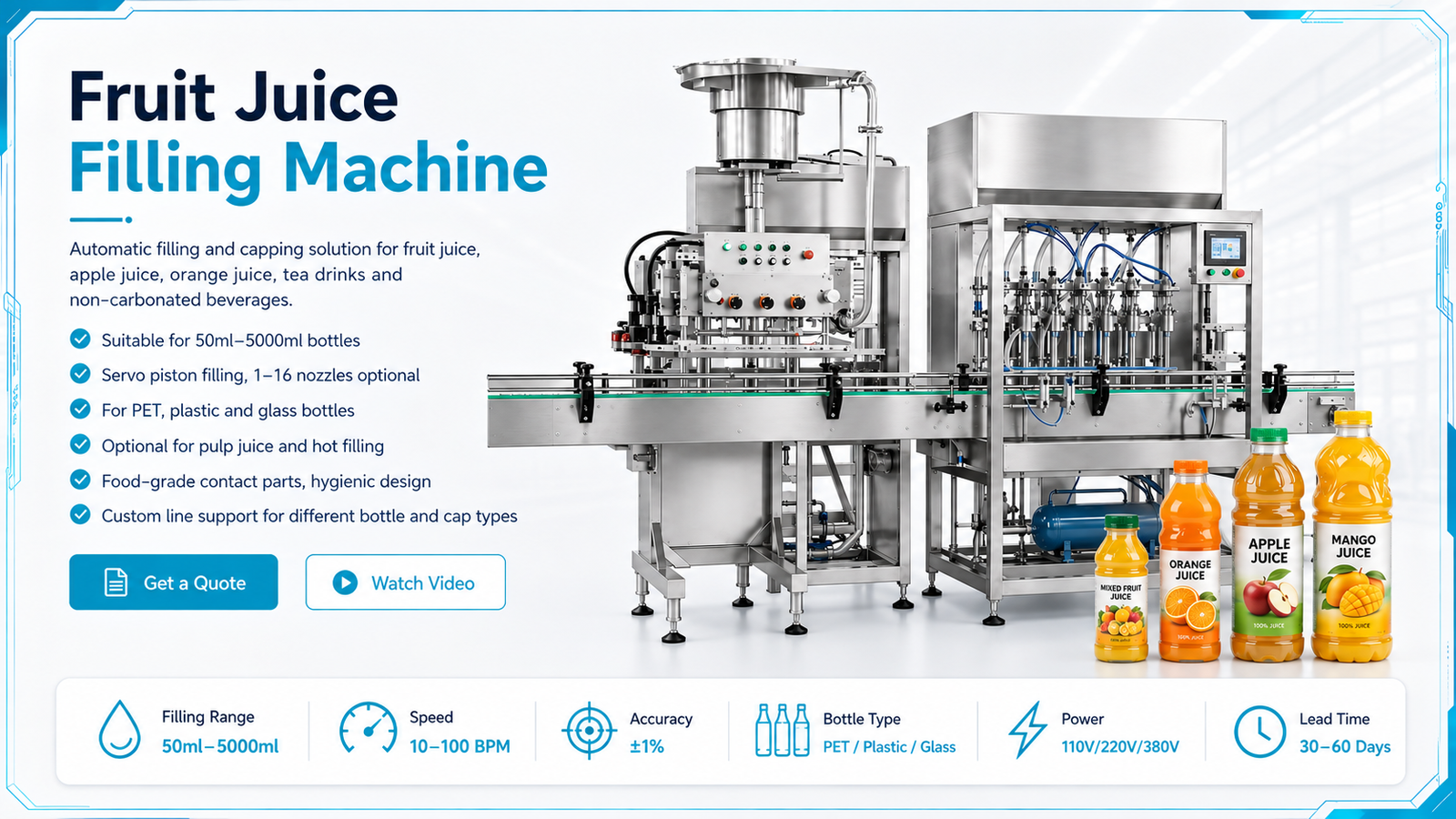
Inline juice bottling solution for fruit juice, apple juice, orange juice, tea drinks, pulp juice and other non-carbonated beverages.
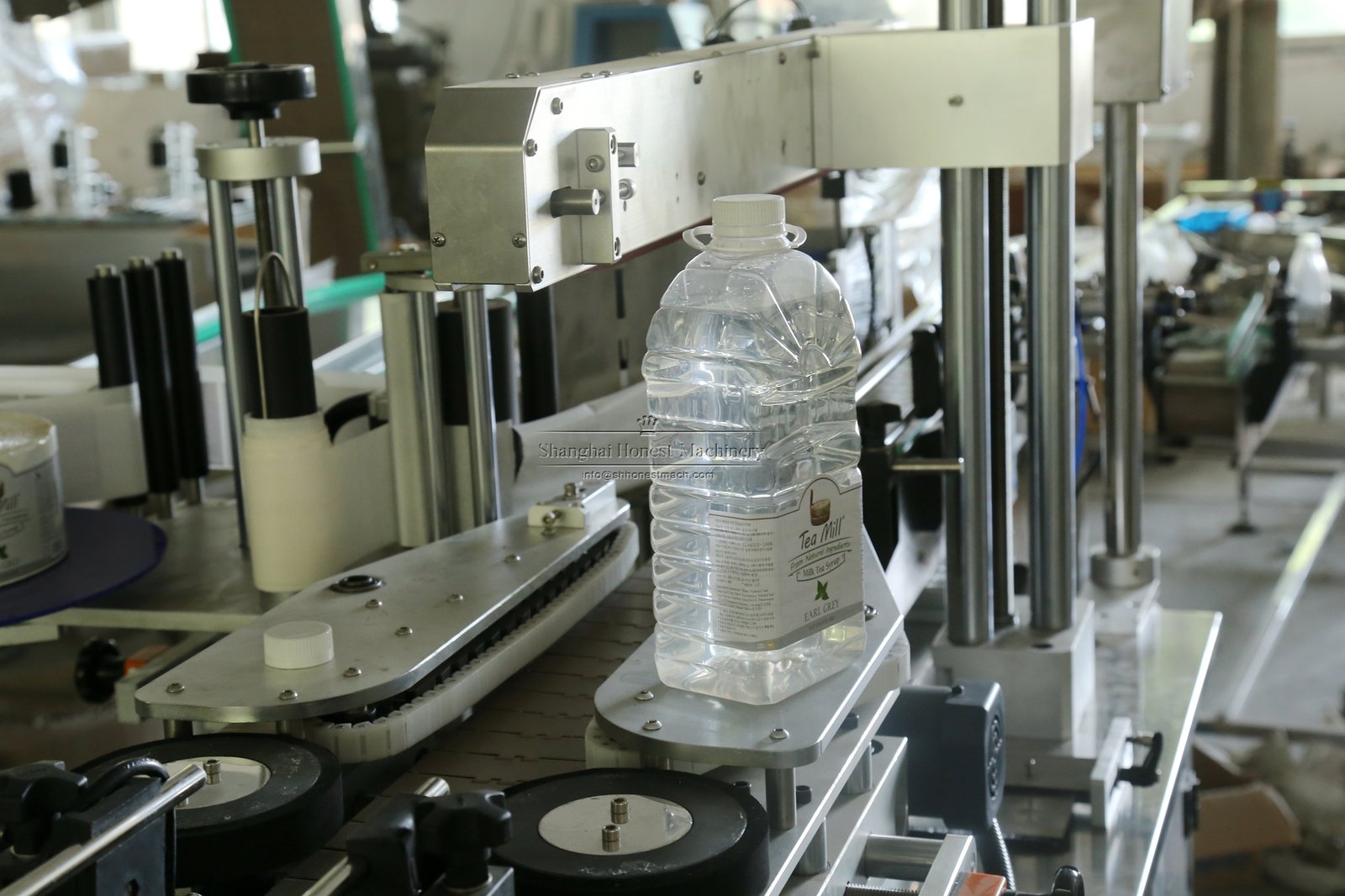
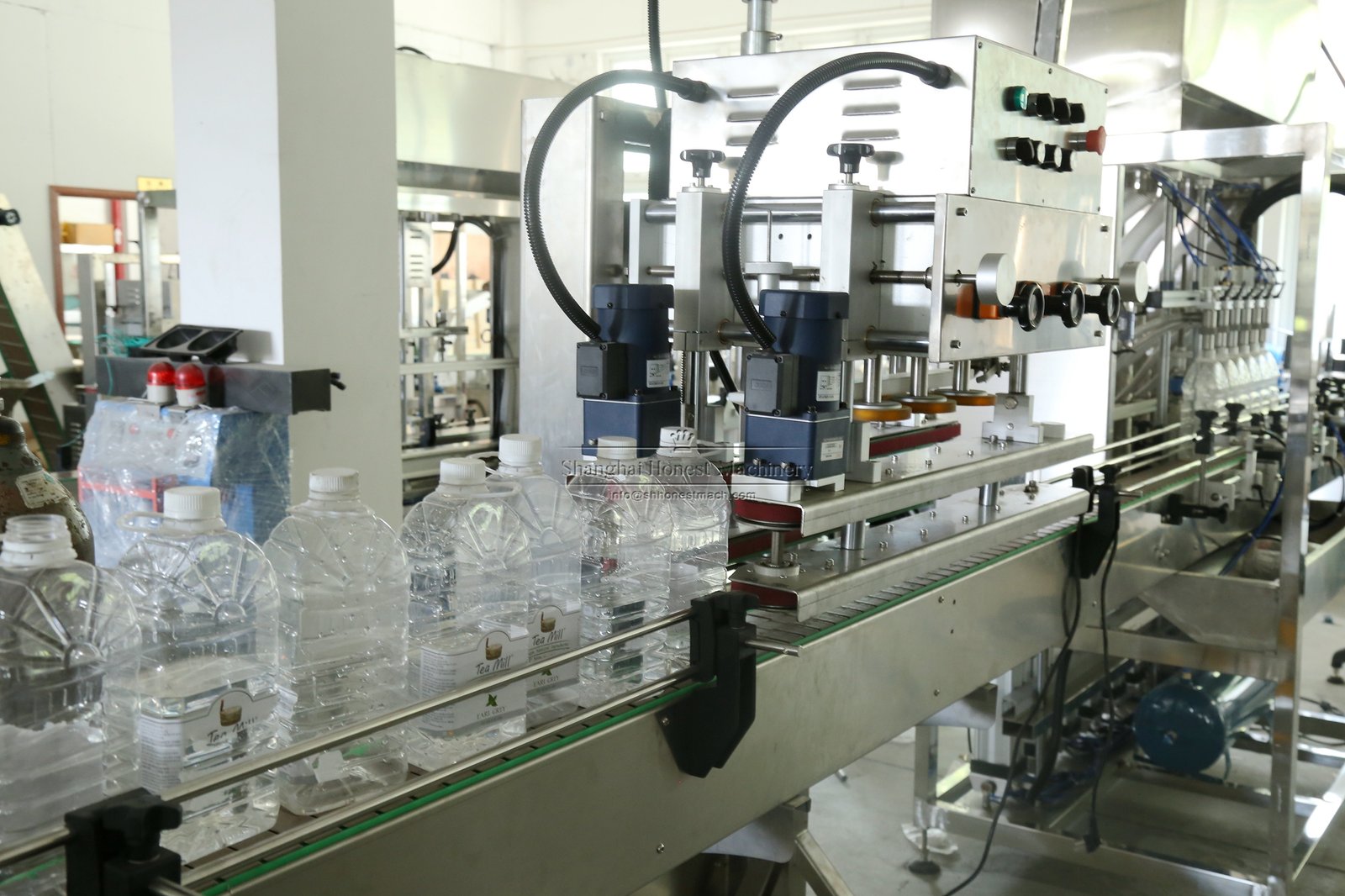
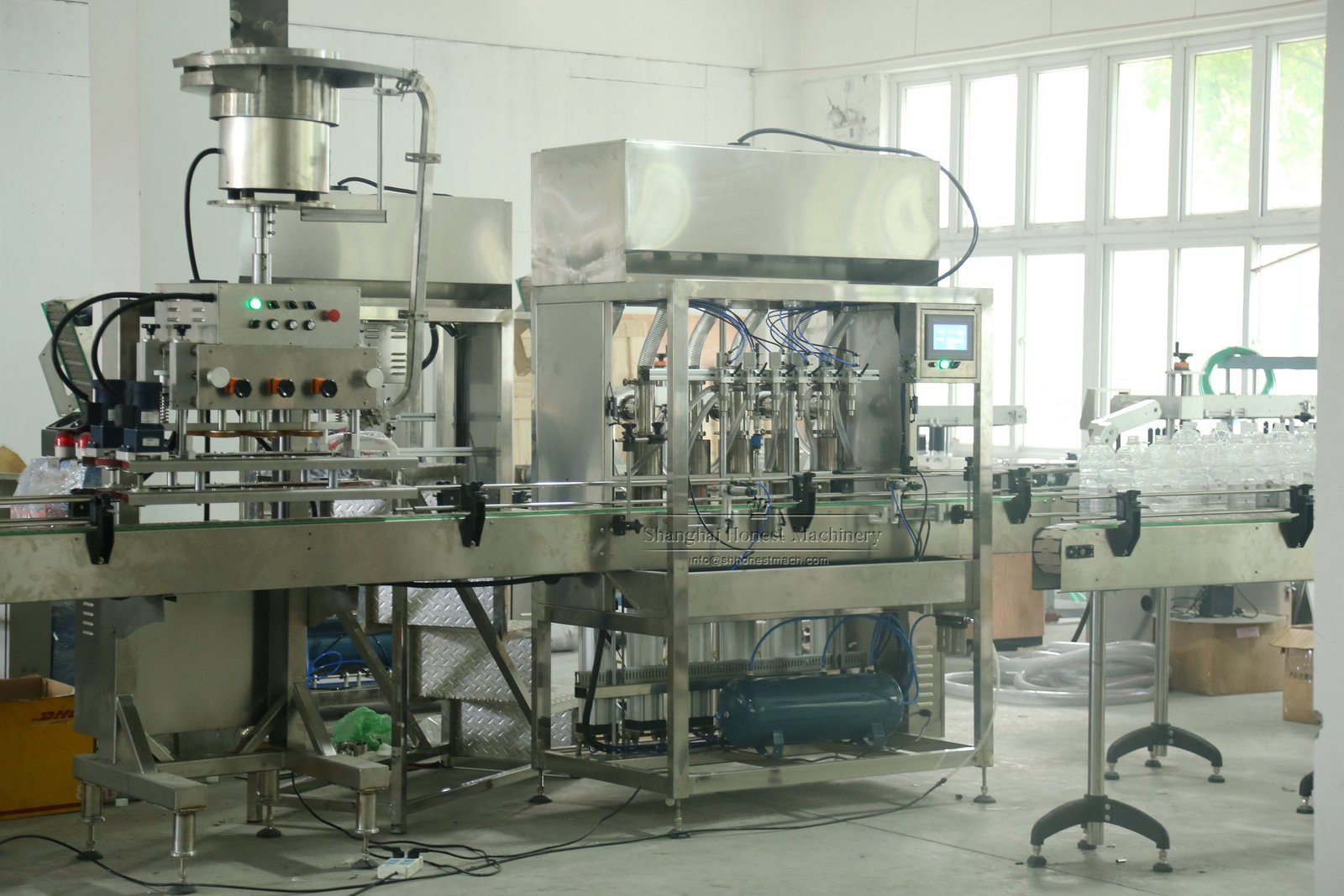
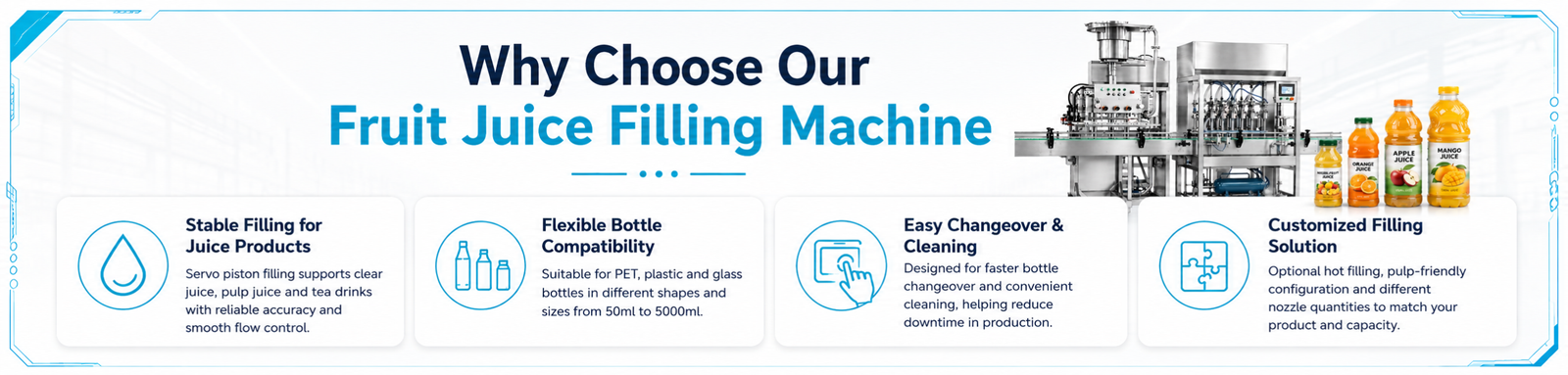
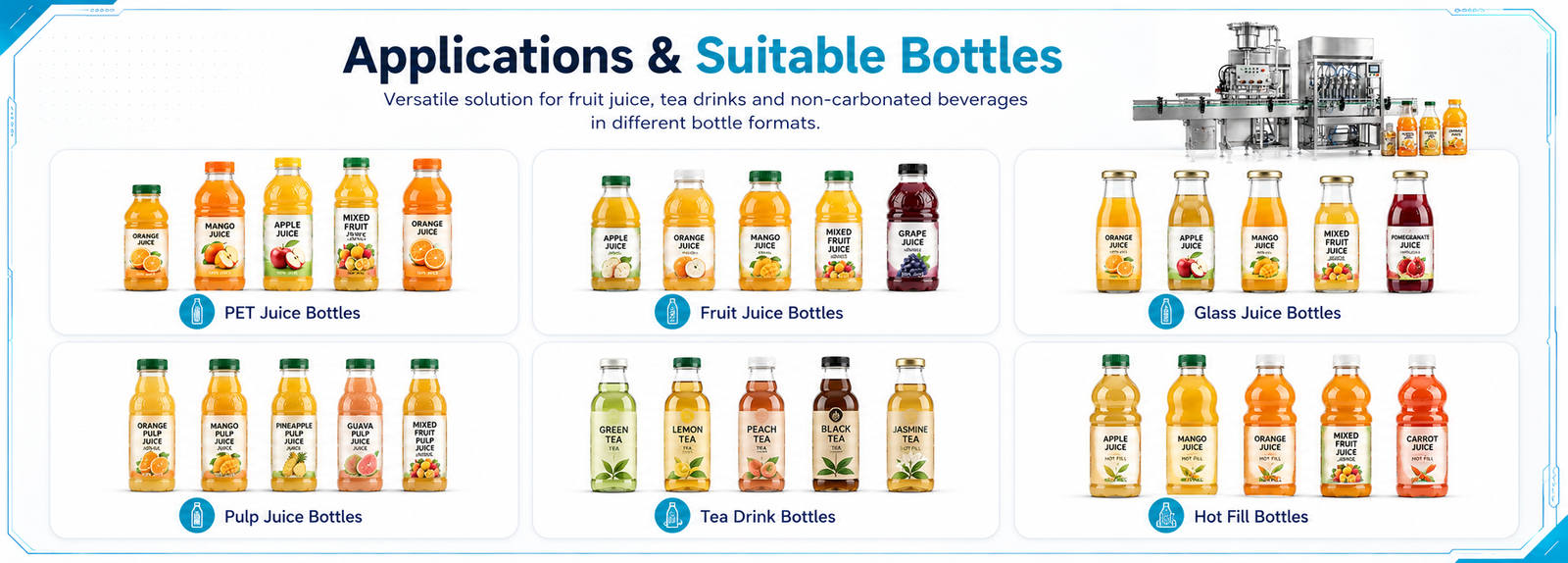
Our automatic fruit juice filling machine is designed for filling apple juice, orange juice, grape juice, mixed fruit juice, tea drinks, flavored water, pulp juice and other non-carbonated beverage products into PET bottles, plastic bottles or glass bottles.
This inline juice filling machine can be customized according to your bottle volume, juice type, pulp content, filling temperature, cap style and target production capacity. For clear juice or low-viscosity drinks, gravity filling or flow meter filling can be selected. For fruit juice with pulp, fiber or higher viscosity, piston filling or enlarged filling valves can be configured to improve filling stability and reduce blockage.
Key Features:
- Suitable for different juice products such as apple juice, orange juice, grape juice, mixed fruit juice, tea drinks, flavored drinks and pulp juice.
- Works with PET, plastic and glass bottles, including round bottles, square bottles and customized beverage containers.
- Custom filling system available for clear juice, pulp juice, low-viscosity drinks or slightly thick beverage products.
- Optional hot filling configuration for fruit juice, tea drinks and non-carbonated beverages with special shelf-life requirements.
- Food-grade contact parts help support clean and hygienic beverage filling production.
Working video:
What we can offer you?
-
100% Refund Policy
If the quality is poor or it can’t run your product, we guarantee a 100% full refund for your peace of mind
-
Two years warranty
Any equipment purchased from us comes with a two-year warranty.we provide free replacements and cover shipping for parts under 10kg damaged due to quality issues, not deliberate damage
-
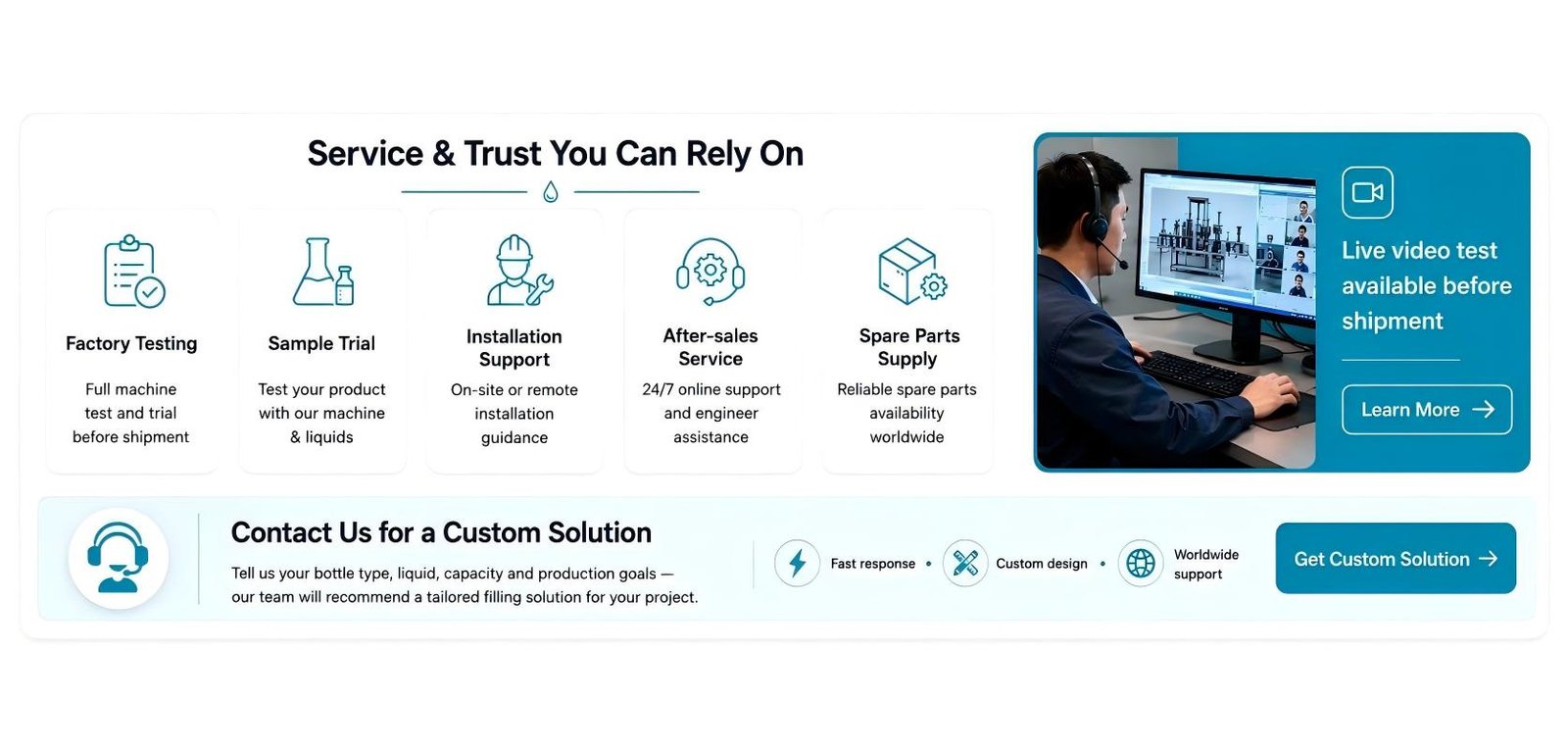
Attentive after-sales service
We promise: all equipment purchased from us is backed by comprehensive after-sales service and lifetime benefits.
-
Timely production and delivery
We oversee the entire process from receiving samples to design and production, providing timely photos and videos to showcase the entire process to ensure the efficiency of equipment production and timely delivery
Parameter:
- Model: Automatic fruit juice filling machine
- Filling volume: 50-5000ml(customized)
- Filling nozzles: 1-16 nozzles for your optional(customized)
- Filling speed: 10-100BPM for your optional(customized)
- Filling method: Piston pump for filling with servo motor control
- Filling accuracy: ±1%(according to product)
- Capping rate: ≥99.99%
- Power supply: Single phase 110V/220V,50/60Hz or three phase 380V/440V 50/60Hz(customized)
- Total dimension: 2100mm*1350mm*2050mm(customized)
Highlight:
1.It use piston pumps for filling, suitable for materials of different viscosities.
2.With servo motor control, it can automatically adjust the filling volume, making it convenient for customer operation and use
1.It can quickly change for different diameter bottles within 30 minutes
1.Machine comes with cleaning function that can do cleaning automatically after finish filling
2.No bottle no filling and no cap no capping
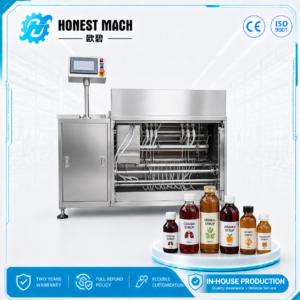
The machine is equipped with an organic glass cover featuring a door stop function to ensure operational safety. Additionally, it comes with a 360-degree rotatable touchscreen for customer-friendly operation and use
What you can get with our fruit juice filling machine
Related Products:
FAQ:
The filling principle should be selected according to the juice’s viscosity, pulp content, flow characteristics and required accuracy, rather than bottle volume alone.
For clear, low-viscosity juice, gravity or flow-meter filling can be suitable. When the product contains pulp, fiber or has higher viscosity, a servo piston filler or larger product passages may provide more stable filling and reduce blockage. Your current machine can be configured according to these different juice characteristics.
For a buyer running several recipes, we recommend providing the viscosity and pulp information for every major SKU, not only the thinnest product. The machine should be selected according to the most difficult juice you expect it to process.
There is no universal particle-size limit for every juice filler. The important factors are the largest particle diameter, fiber length, pulp percentage, filling-valve passage and product viscosity.
Your fruit juice machine can be configured with piston filling or enlarged filling valves when pulp or fibers are present. Industrial beverage processing systems handling particles also require special attention to particle streams and product transfer because larger inclusions behave differently from homogeneous liquids. Tetra Pak, for example, uses dedicated processing approaches for drinks containing pieces or particles.
For a pulp-juice project, the customer should therefore provide:
- maximum pulp particle size,
- approximate pulp percentage,
- whether fibers are long or short,
- whether particles settle during storage,
- and an actual product sample if possible.
This is more useful than simply describing the product as “mango juice” or “orange juice.”
Not necessarily. If juice will be filled hot, the PET bottle itself must be designed for the required thermal conditions.
Commercial PET hot-fill systems commonly operate at elevated temperatures; Sidel, for example, describes juice/nectar/tea hot-fill applications around 85–88°C, and its hot-fill documentation notes that conventional PET does not necessarily have sufficient thermal resistance for such conditions.
Therefore, before configuring a hot-fill line, the buyer should confirm:
- filling temperature,
- PET resin/bottle specification,
- bottle neck finish,
- expected vacuum deformation after cooling,
- cooling process,
- and whether the bottle supplier certifies the package for hot filling.
The filling machine alone cannot convert an ordinary lightweight PET bottle into a hot-fill-compatible package.
Oxygen is relevant not only to product quality but also to filling behavior. GEA notes that dissolved oxygen can affect beverage taste and color and can also negatively influence filler performance.
For oxygen-sensitive juice, a complete process may therefore include deaeration upstream of filling. Tetra Pak also describes juice-processing systems in which a deaerator can be included before pasteurization/filling stages.
This is particularly worth discussing for:
- premium fruit juice,
- products where color stability matters,
- formulations sensitive to oxidation,
- and lines where excessive dissolved gas contributes to unstable filling or foaming.
So when comparing quotations, buyers should look beyond the filler itself and ask whether upstream product preparation is compatible with the desired finished-product quality.
No. The filling machine is only one part of the preservation process.
Shelf-life performance depends on the complete validated process, including the product formulation, acidity, heat treatment, filling temperature, container, closure, hygienic conditions and cooling/storage process. Tetra Pak describes juice pasteurization as a separate processing step used before filling, and notes that aseptic buffers can be installed between pasteurization and filling to improve process continuity.
Similarly, commercial beverage suppliers distinguish between hot filling and aseptic filling as different processing concepts rather than treating them as interchangeable machine options.
For a serious juice project, buyers should therefore define the required:
Product formulation → pasteurization process → filling method → closure → cooling → shelf-life target
before finalizing the machinery configuration.

Let’s start this journey together!
Revolutionize your production with our bottling machines!Share your needs and we’ll be in touch with a tailored quote within 48 hours.
SEND BELOW INQUIRY