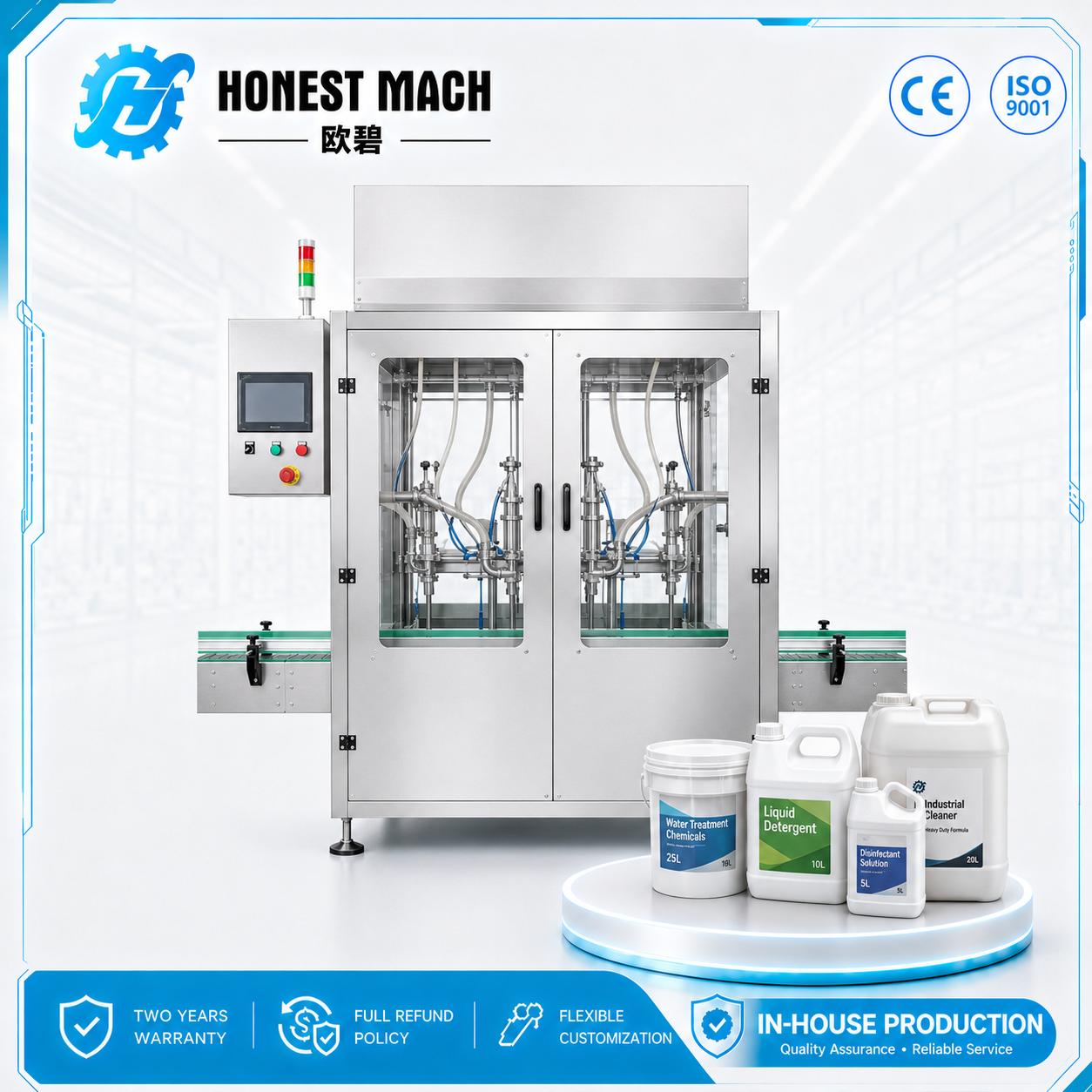
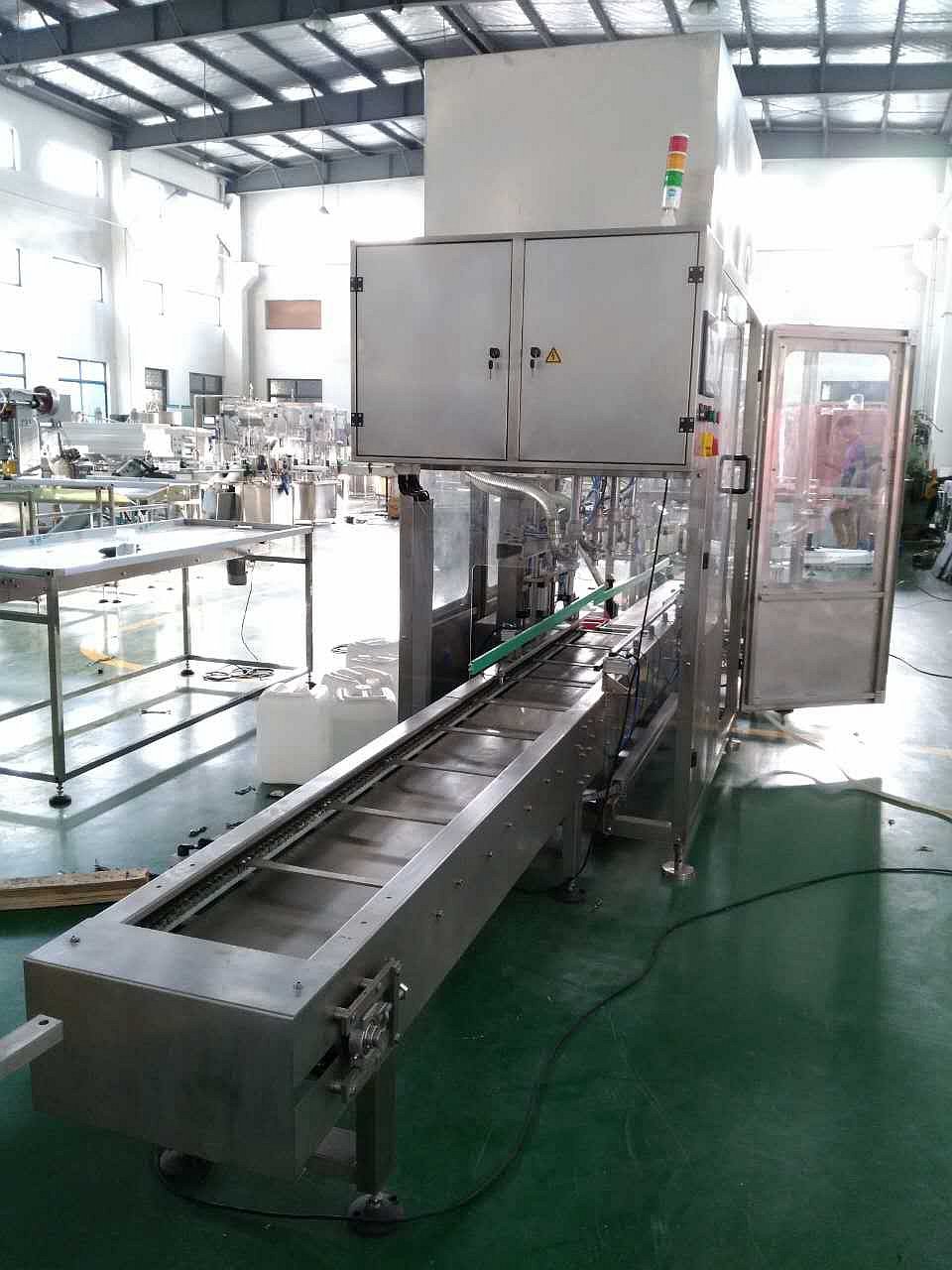
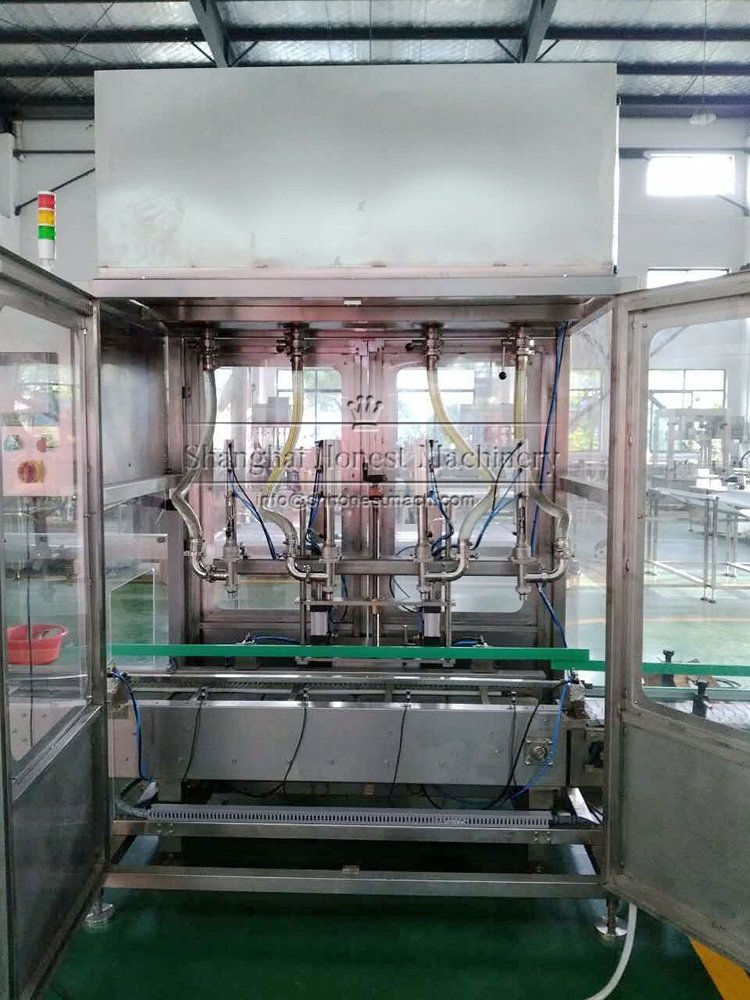
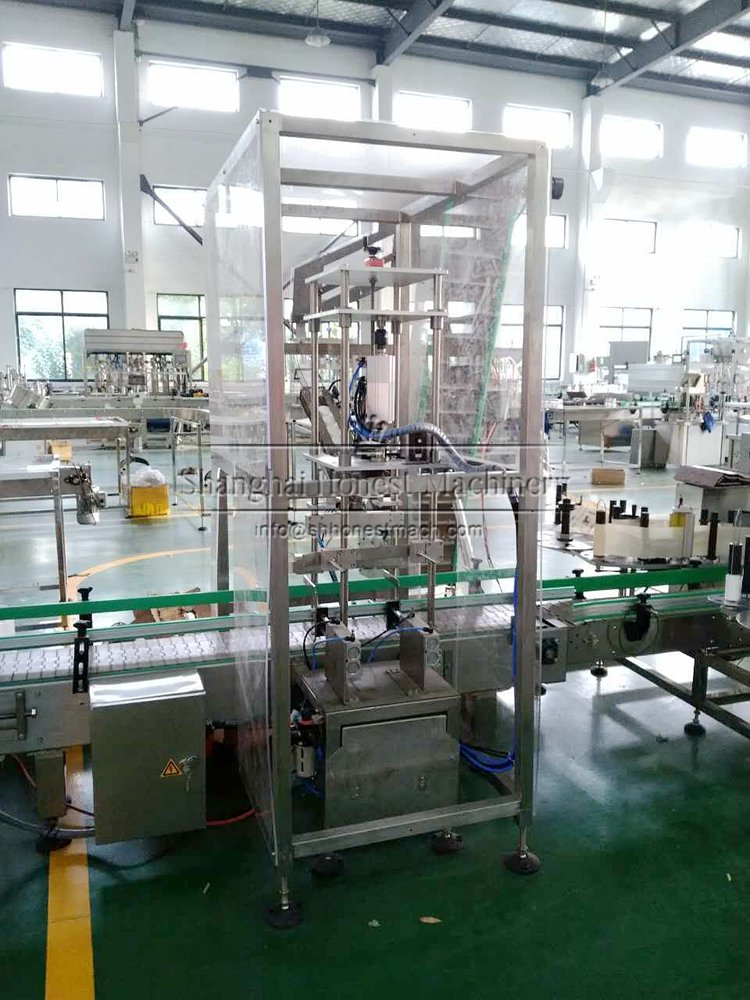
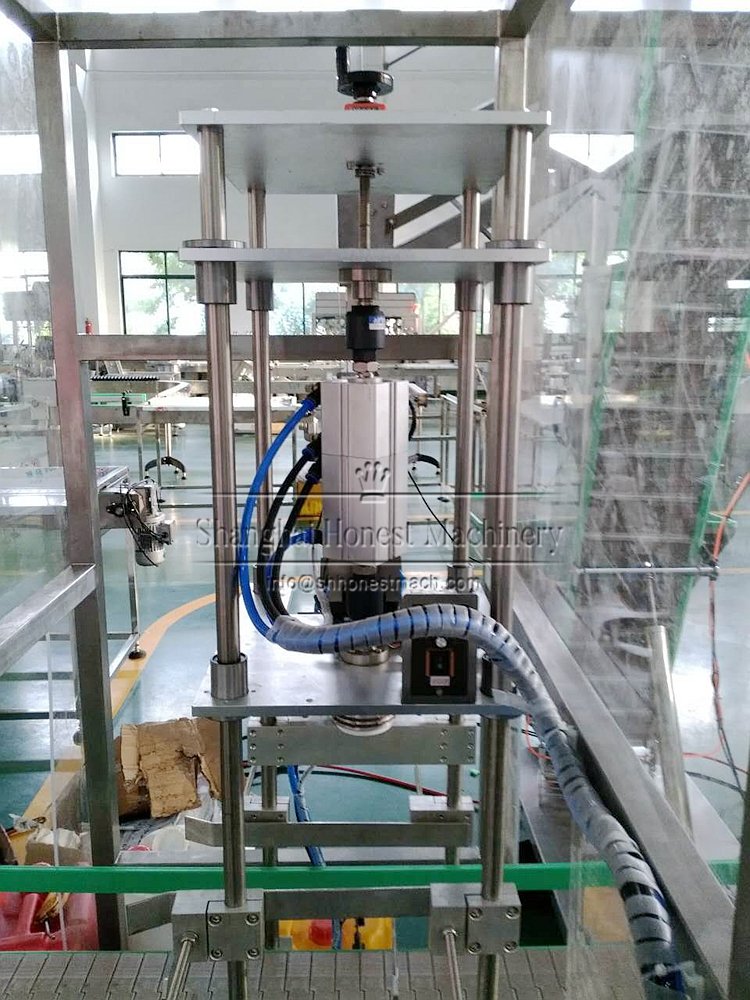
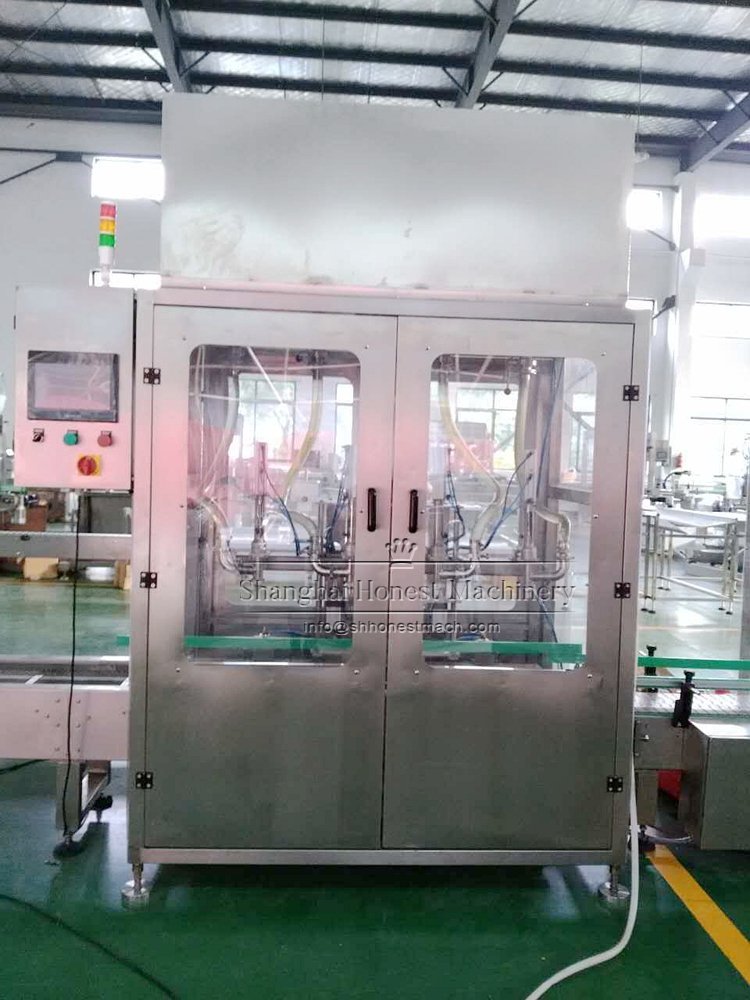
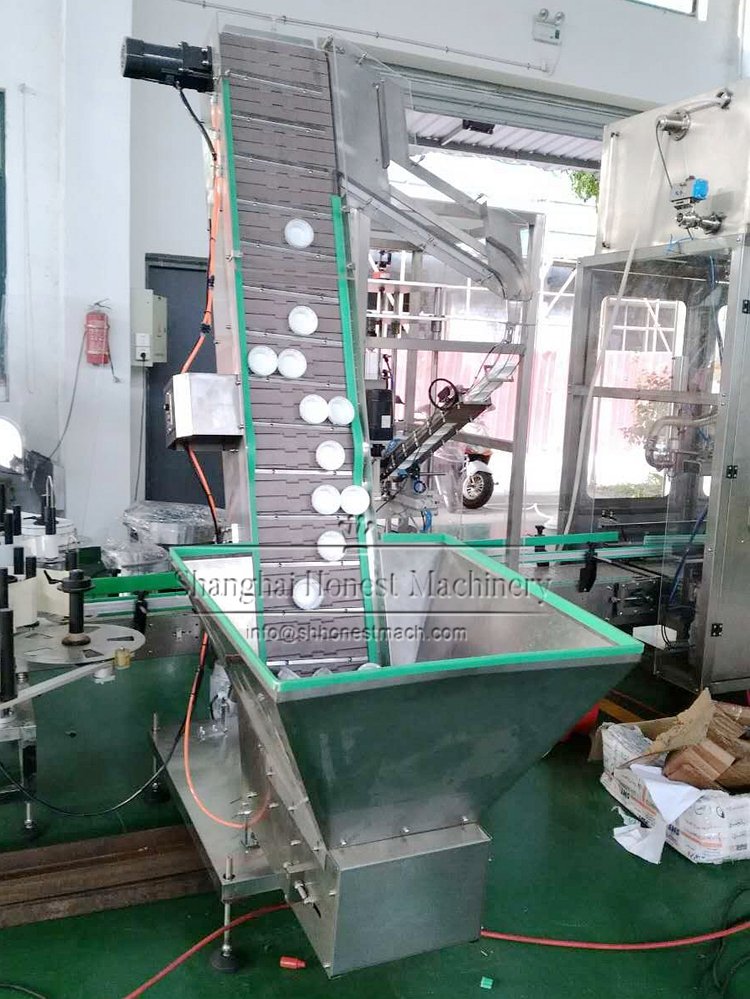
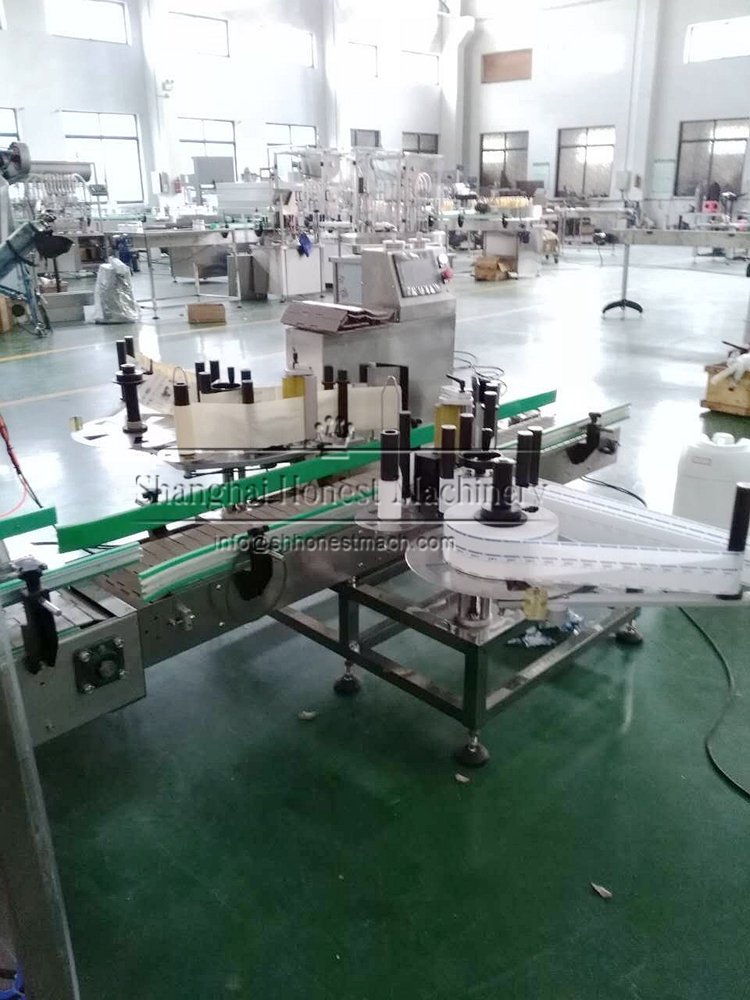
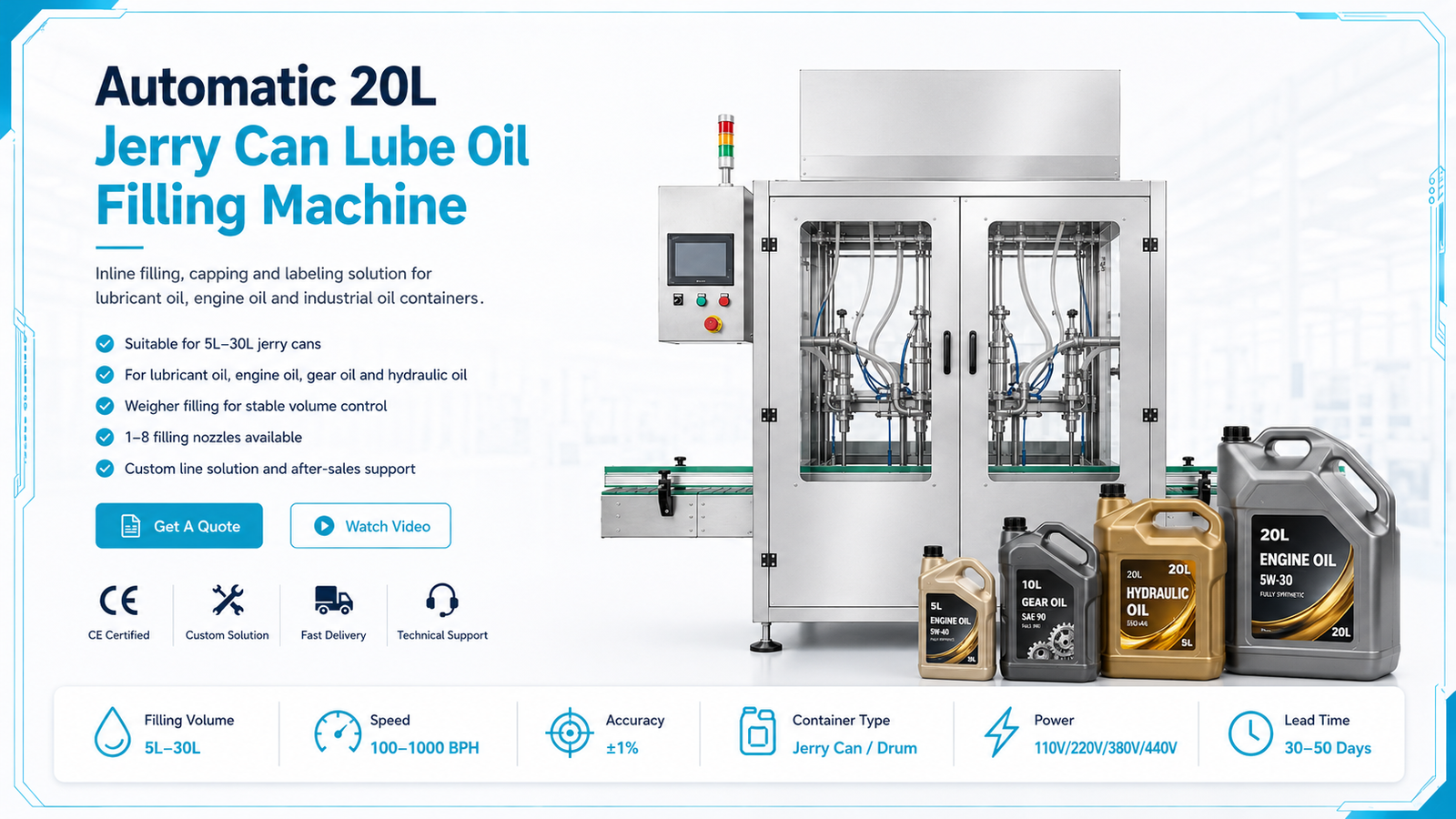
Automatic 20L jerry can lube oil filling machine
Inline filling, capping and labeling solution for 20L jerry cans of lubricant oil, engine oil, motor oil, gear oil and industrial oil products.
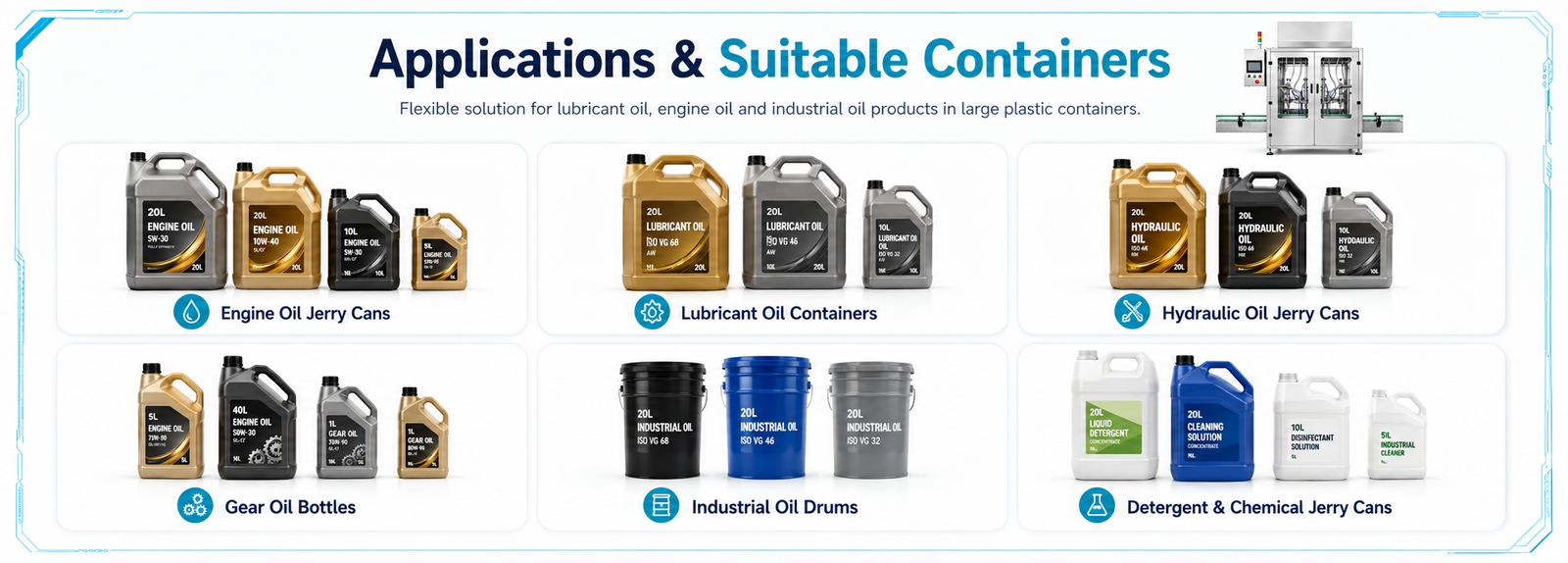
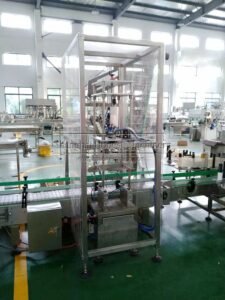
Our automatic 20L jerry can lubricant oil filling machine is designed for filling lubricant oil, engine oil, motor oil, gear oil, hydraulic oil, transmission oil, brake oil and other automotive or industrial oil products into 5L, 10L, 20L and 30L HDPE jerry cans, plastic drums and handled containers.
This inline jerry can oil filling machine can be customized according to your container volume, oil viscosity, cap type, filling accuracy requirement and target production capacity. For lubricant oil and engine oil products, flow meter filling, gear pump filling, piston filling or net weight filling can be selected to achieve stable filling volume and reduce oil waste.
Key Features:
- Designed for 20L jerry cans including HDPE jerry cans, plastic drums, handled containers and large oil bottles.
- Suitable for lubricant oils such as engine oil, motor oil, gear oil, hydraulic oil, transmission oil and industrial oil.
- Custom filling system with flow meter, gear pump, piston or net weight filling according to oil viscosity and accuracy needs.
Tell us your oil type, jerry can size, oil viscosity, cap style and target capacity. We will recommend a suitable 20L lubricant oil filling and capping solution for your production.
What we can offer you?
-
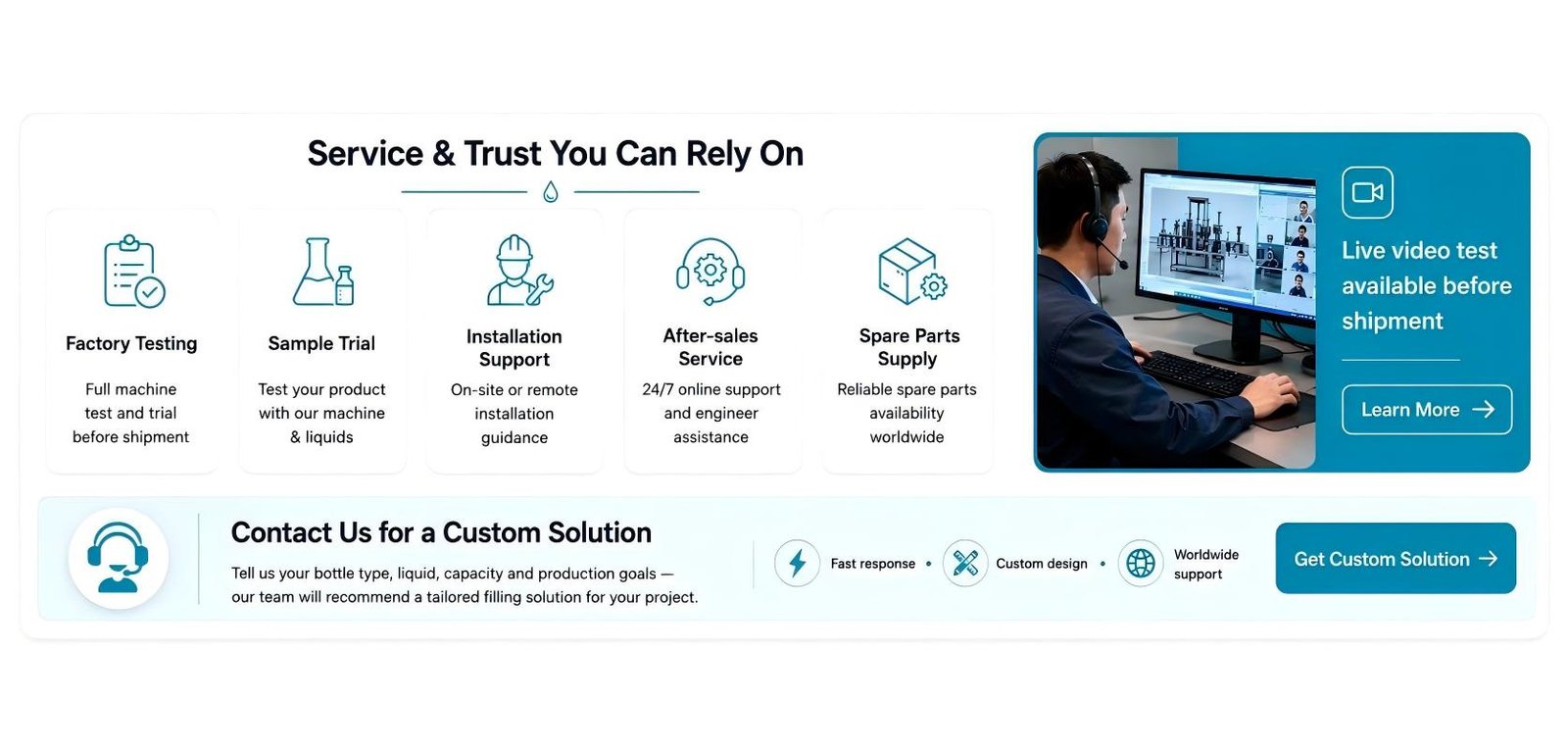
100% Refund Policy
If the quality is poor or it can’t run your product, we guarantee a 100% full refund for your peace of mind
-
Two years warranty
Any equipment purchased from us comes with a two-year warranty.we provide free replacements and cover shipping for parts under 10kg damaged due to quality issues, not deliberate damage
-
Attentive after-sales service
We promise: all equipment purchased from us is backed by comprehensive after-sales service and lifetime benefits.
-
Timely production and delivery
We oversee the entire process from receiving samples to design and production, providing timely photos and videos to showcase the entire process to ensure the efficiency of equipment production and timely delivery
Parameter:
- Model: Automatic jerry can filling machine
- Filling volume: 5-30L(customized)
- Filling nozzles: 1-8 nozzles for your optional(customized)
- Filling speed: 100-1000BPH for your optional(customized)
- Filling method: Weigher for filling
- Filling accuracy: ±1%(according to product)
- Capping rate: ≥99.99%
- Power supply: Single phase 110V/220V,50/60Hz or three phase 380V/440V 50/60Hz(customized)
- Total dimension: 2300mm*1650mm*2250mm(customized)
Highlight:
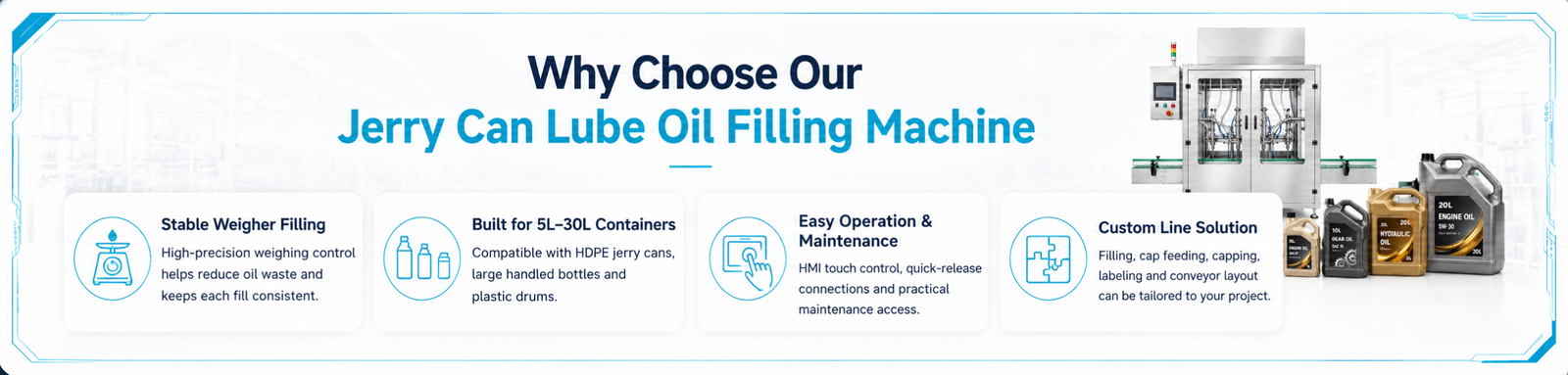
Measurement with high precision weighing combined numerical control instrument with microelectronics,filing accuracy is quite high,also can be convenient for filing capacity,stepless mediation is intuitive,the operation is very simple

1.All connections adopt quick release joint,easy to dismantle and maintain,reduce the cost of the use and maintenance,save the time
What you can get with our automatic 20L jerry can lubricant oil filling machine
Related Products:
FAQ:
There is no single filling principle that is best for every lubricant.
For large 20L jerry cans, net-weight filling is particularly attractive when accurate finished weight and reduced product giveaway are priorities. Because the measurement is based on actual weight, it is less sensitive to changes in oil temperature, viscosity or aeration than purely volumetric dosing. PACK’R specifically highlights this advantage for jerrycan filling.
However, gear-pump, piston and flow-meter systems can also be appropriate depending on viscosity, production speed and container size. Your current machine can be configured around these factors, although its published standard parameter lists weighing filling. Other lubricant-line manufacturers likewise select pump, piston or weighing technology according to viscosity and fill volume.
For a real project, the decision should be based on:
- oil viscosity at the actual filling temperature,
- 5L / 10L / 20L / 30L pack mix,
- required BPH,
- allowable overfill,
- and required filling tolerance.
The nominal BPH should never be evaluated without the actual oil viscosity.
A low-viscosity hydraulic oil moves through piping and nozzles differently from a heavy gear oil. As viscosity rises, transfer and filling generally take longer, so the same machine may produce different outputs with different oil grades. Lubricant-line suppliers explicitly note that actual filling speed depends on both viscosity and filling volume.
This is particularly important with 20L packs because each filling cycle transfers a large amount of product.
When requesting a guaranteed capacity, buyers should therefore specify something like:
“≥450 x 20L cans/hour with ISO VG 68 oil at approximately 25°C”
rather than simply asking for:
“500 cans/hour.”
That makes FAT acceptance much more meaningful.
For lubricant packaging, the filling nozzle’s cut-off performance is almost as important as filling accuracy.
Residual oil can string or drip after the nozzle closes. If it lands on the jerry can neck, cap threads or outer wall, it can cause:
- dirty finished containers,
- unreliable labeling,
- slippery handling,
- oil accumulation on the conveyor,
- and unnecessary product loss.
Lubricant-line engineering guidance therefore treats clean cut-off and oil residue around the container mouth as specific design concerns.
For a 20L project, the filling head should be matched to the actual oil viscosity and container opening. A properly designed cut-off/nozzle arrangement plus controlled filling speed helps keep the jerry can cleaner before capping and labeling.
During FAT, I would specifically inspect the 20th, 50th and 100th consecutive filled container, rather than only the first sample, because residue buildup often becomes visible only after continuous running.

A filled 20L lubricant jerry can is a heavy industrial package, so its conveyor system cannot simply be treated like a small-bottle conveyor.
Large-container line design has to consider:
- loaded container weight,
- bottom shape and stability,
- handle position,
- accumulation pressure,
- conveyor width,
- guide-rail strength,
- filling-position stability,
- and the transition into the capping station.
Lubricant-line suppliers specifically identify conveyor strength, filling position and cap handling as important considerations for heavy jerry cans and pails.
This becomes even more important if one line runs both 5L and 20L/30L containers, because the containers have very different centers of gravity and footprints.
For that reason, buyers should send not only the nominal capacity but also the empty and filled container dimensions, bottom profile and handle orientation before conveyor layout is finalized.
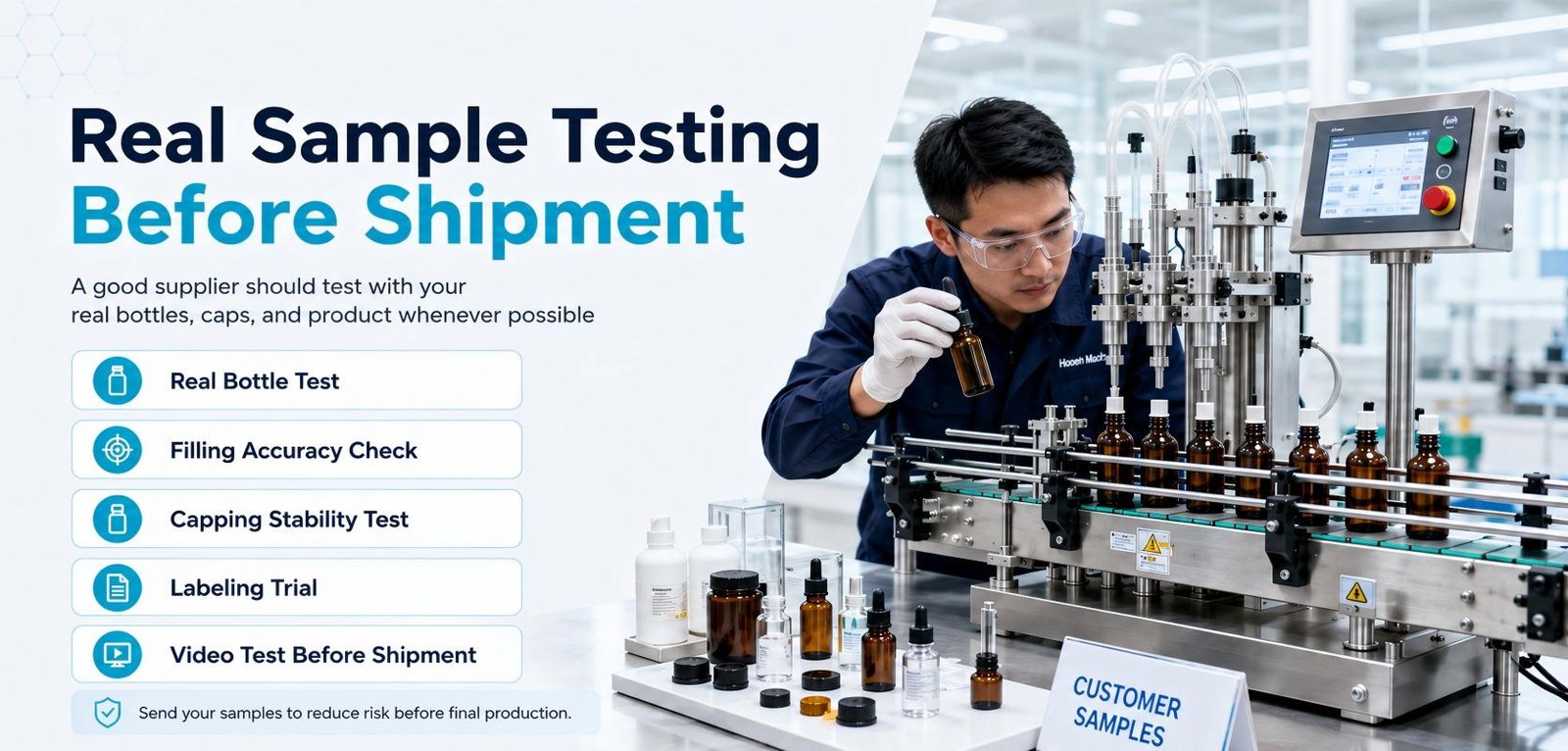
For this type of machine, FAT should test the actual oil + jerry can + cap combination, not just run the conveyor empty.
A practical acceptance test should include:
- repeated filled-weight checks,
- accuracy at the agreed 20L target,
- output at the agreed oil viscosity,
- oil residue around the container mouth,
- nozzle dripping after filling,
- cap placement and tightening,
- leakage after capping,
- stability of heavy filled cans through the conveyor,
- no-container/no-fill operation,
- no-container/no-cap operation,
- and a continuous production run rather than isolated test cycles.
Your current machine specification lists ±1% filling accuracy, ≥99.99% capping rate, no-bottle/no-filling and no-cap/no-capping functions, making these appropriate items to turn into measurable FAT conditions.
The buyer should also define the FAT product precisely—for example:
20L HDPE jerry can + SAE 5W-30 engine oil + specific screw cap + required BPH
because filling performance can change materially with oil viscosity, container volume and closure format.
Let’s start this journey together!
Revolutionize your production with our bottling machines!Share your needs and we’ll be in touch with a tailored quote within 48 hours.
SEND BELOW INQUIRY